Invisalign in Aurora
Clear, removable trays that move your teeth a little at a time. We assess your bite first and tell you honestly whether aligners or braces suit you better.
The short answer
Invisalign uses a series of clear, removable plastic trays to move teeth gradually into place. You wear them about 22 hours a day and switch to a new set every week or two. At Aurora Gateway Dental in Aurora, Dr. Farhad Sobouti assesses your teeth and bite to see whether aligners suit your case.
- Visits
- Assessment, fitting, then check-ins every few weeks to months
- Timeline
- Several months to over a year, depending on your case
- Comfort
- Pressure for a day or two with each new tray
- Coverage
- Depends on your plan's orthodontic coverage
- Dentist
- Dr. Farhad Sobouti, DDS, MSc, FRCDC
At a glance
What it is
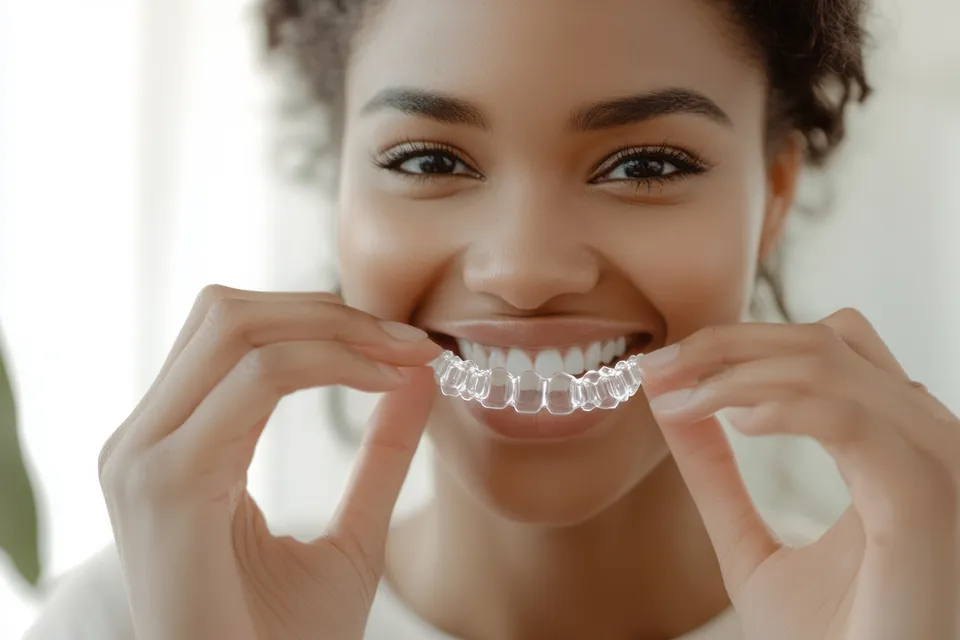
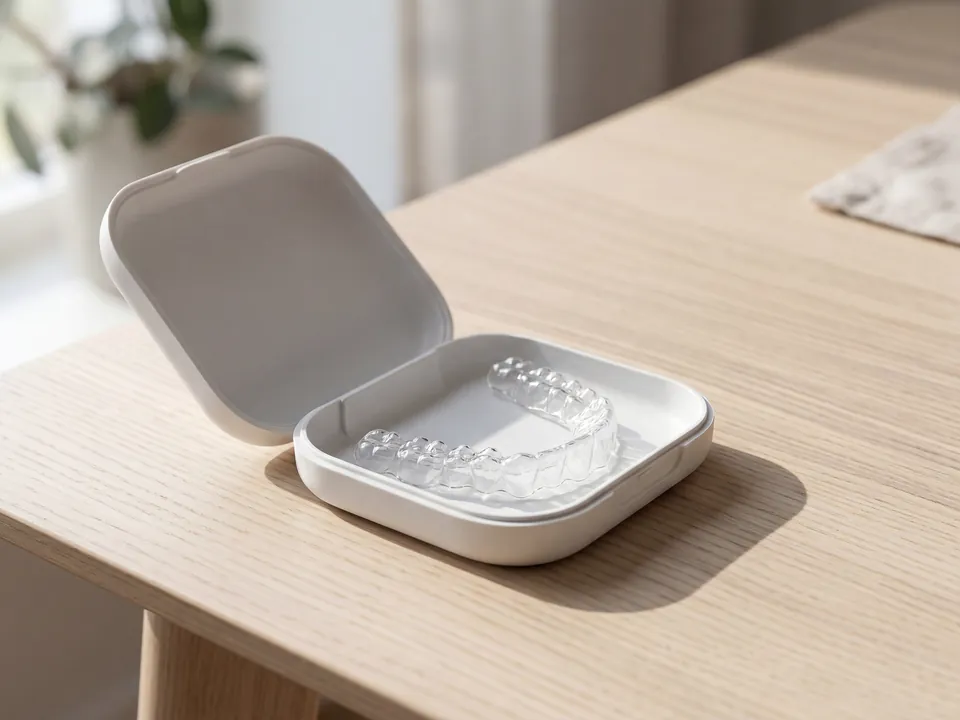
Invisalign is a brand of clear aligners. Aligners are thin, clear plastic trays made to fit your teeth closely. You wear each set for a week or two as directed, then switch to the next one. Each set moves your teeth a small step closer to the position planned at the start.
Because the trays are clear and come out, many adults and teens find them easy to fit into work, school and social life. You take them out to eat, to drink anything but plain water, and to brush and floss. The trade-off is simple: they only move teeth while they are in your mouth, so they need to be worn about 22 hours a day.
At our Aurora clinic, Dr. Farhad Sobouti, DDS, MSc (Orthodontics), FRCDC, provides our orthodontic treatment, including aligners. He will tell you plainly whether aligners suit your goals. Some bite problems and tooth movements are handled more predictably with braces, which are explained on our orthodontics page.
Is it right for me?
- Your teeth are crowded, gapped or a little crooked.
- You have a mild to moderate bite concern, which your dentist will confirm.
- Your teeth have drifted since you had braces years ago.
- You can commit to wearing trays about 22 hours a day.
- Your teeth and gums are healthy, or you will treat cavities and gum problems first.
- You want a less noticeable way to straighten your teeth.
Step by step
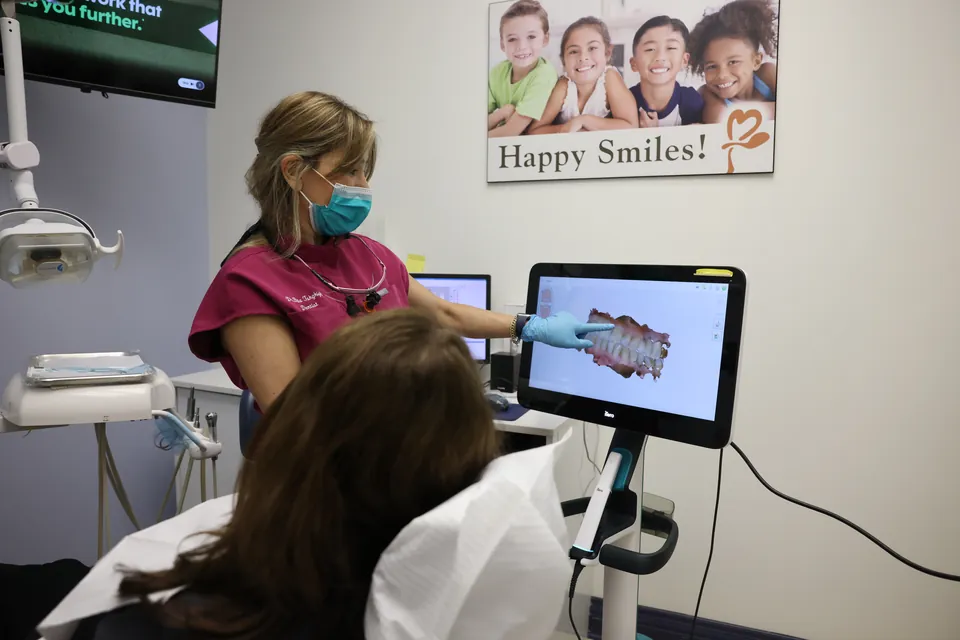
- Orthodontic assessmentDr. Sobouti checks your teeth, gums, bite and jaw and takes records such as photos and X-rays. He explains whether aligners fit what you want to change.
- Treatment planYour teeth are recorded to build a planned series of small movements. You can review the plan and the expected timeline before you agree.
- AttachmentsSmall tooth-coloured bumps may be bonded to some teeth. They give the trays something to grip so each tooth moves as planned.
- Wear and switchYou wear each set as directed and switch on schedule. We show you how to put trays in, take them out and keep them clean.
- Progress checksWe check that your teeth are tracking with the plan. Sometimes a few extra trays are needed near the end to finish the details.
- RetainersWhen the movement is complete, you receive retainers. Wearing them as directed is what keeps your teeth from drifting back.
How it compares
| Question | Clear aligners (Invisalign) | Metal braces | Tooth-coloured braces |
|---|---|---|---|
| How it looks | Nearly invisible | Visible metal | Less noticeable |
| Removable? | Yes | No | No |
| Food limits | None, trays come out | Avoid hard and sticky food | Avoid hard and sticky food |
| Daily effort | Wear about 22 hours, switch trays | Clean around brackets | Clean around brackets |
| Cases treated | Many mild to moderate cases | Most cases | Most cases |
| Can be lost? | Yes | No | No |
General information. Your dentist will explain what applies to you.
Benefits and risks
Benefits
- Clear trays are hard to notice in everyday conversation.
- You can eat the foods you like, because the trays come out at meals.
- Brushing and flossing are easier than with brackets and wires.
- Smooth plastic trays have no wires to poke your cheeks.
- You see the planned tooth movements before treatment starts.
Risks and limits
- Results depend on wear time. Trays left out too often mean slower or unfinished movement.
- Teeth often feel tight or tender for a day or two after each new set.
- Sugary or acidic drinks sipped with trays in can pool against your teeth and raise the risk of decay and staining.
- Some cases need extra trays, or a switch to braces, to finish.
- Without retainers, teeth tend to shift back over time.
Cost and coverage
Aligner fees are set after your orthodontic assessment, because the number of trays and the length of treatment differ a great deal from one person to the next. We use the Ontario Dental Association fee guide as our reference. Some private plans include orthodontic coverage, often with a lifetime limit, and some only cover children, so we bill your insurer directly and can send a predetermination before you start. When we last checked, the Canadian Dental Care Plan coverage page listed orthodontic services as not available; check Canada.ca for any change. Parisa, our Treatment and Financial Coordinator, will explain your payment options before treatment. You can also ask about our in-house dental plan and student program. You get a written estimate before your first tray is ordered.
What shapes your estimate
- How complex your tooth movement is
- The expected number of trays and length of treatment
- Whether extra trays may be needed to finish
- Records such as photos, X-rays and digital or physical models
- Fillings, cleanings or gum care needed first
- The type of retainers after treatment
Read more about insurance and payment, the Canadian Dental Care Plan and IFHP coverage.
After your visit
- Wear your retainers exactly as directed, often full-time at first and then at night.
- Clean trays and retainers daily with a soft brush and cool water; hot water can warp them.
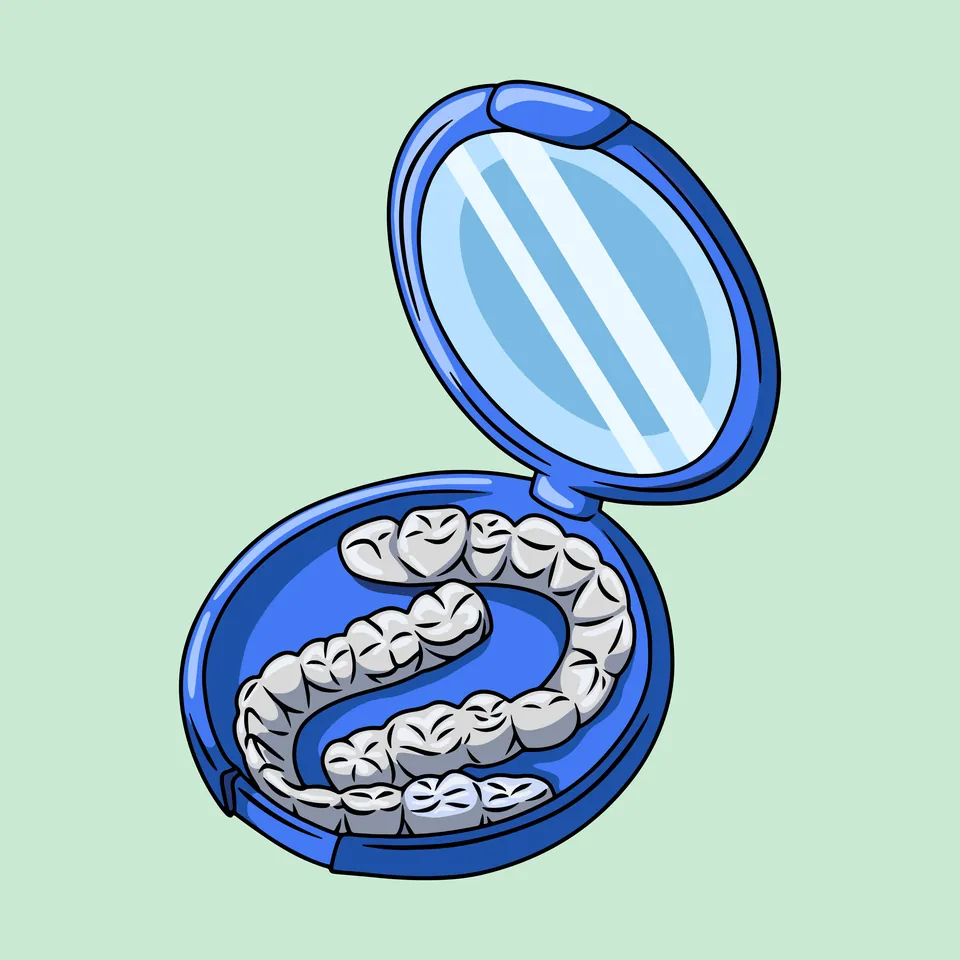
- Keep trays in their case whenever they are out, never wrapped in a napkin.
- Bring your retainers to checkups so we can check the fit.
Questions
Does Invisalign hurt?
Most people feel pressure or tightness for a day or two after switching to a new set of trays. That feeling is a sign the teeth are moving. It usually eases quickly, and we can suggest simple ways to stay comfortable.
How long does Invisalign take?
It depends on how far your teeth need to move. Simpler cases may take several months, while more complex ones can take a year or longer. Dr. Sobouti gives you an expected timeline after your assessment.
Can I drink coffee with my trays in?
It is safest to take trays out for anything other than plain water. Coffee, tea and sugary or acidic drinks can seep under the trays and stain or harm your teeth. Rinse or brush before you put the trays back in.
Is Invisalign a good choice for teens?
It can be, if your teen will wear the trays as directed. Some teens still have growing jaws or adult teeth coming in, which can make braces the better fit. We talk through both options with you and your teen.
What happens if I lose a tray?
Call us. Depending on your stage of treatment, we may ask you to move to the next set early, go back to the previous set, or order a replacement.
Will I need a retainer afterwards?
Yes. Teeth naturally tend to drift after any orthodontic treatment. Retainers hold them in their new position, and many people keep wearing them at night for the long term.
Reviewed by the dentists at Aurora Gateway Dental Care. Last updated November 12, 2026. This page is general information, not personal medical advice.
Your dentist

Dr. Farhad Sobouti, DDS, MSc, FRCDC
DDS, Shahid Beheshti University of Medical Sciences
Read more →Trusted health information
Related treatments
Patients visit from
Newmarket · Richmond Hill · Oak Ridges, Richmond Hill · East Gwillimbury · Holland Landing · Mount Albert · King City · Nobleton · Stouffville · Bradford
Ask us about invisalign clear aligners
(289) 475-5497Prefer to type? Send a request and we'll contact you to confirm a time.
676 Wellington Street East, Unit 3
Aurora, ON L4G 0K3