Oral Surgery in Aurora
When a tooth cannot be saved, or needs to come out to make room for other care, we remove it as gently as we can and help you plan what comes next.
The short answer
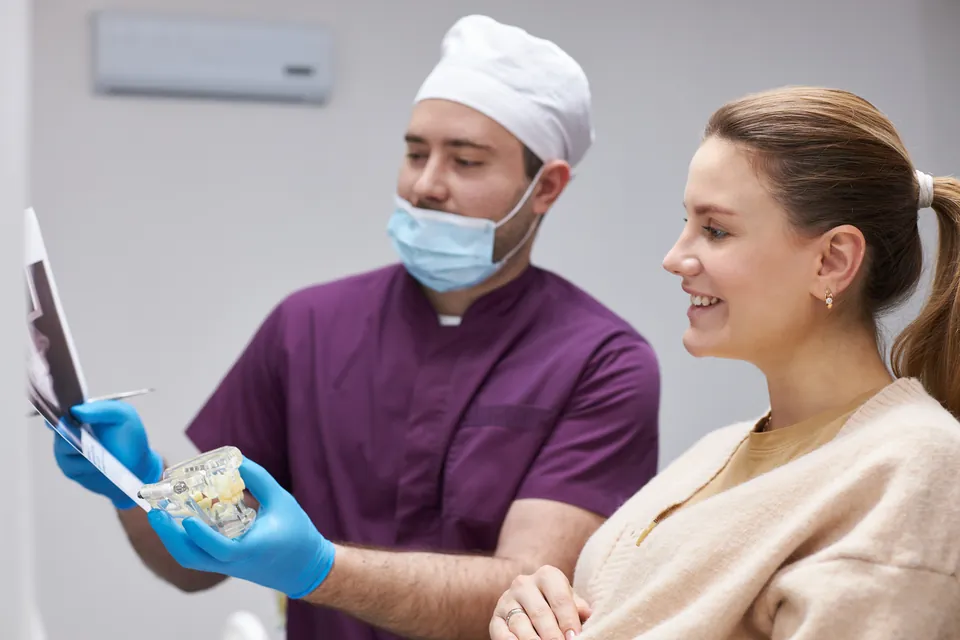
Oral surgery at Aurora Gateway Dental Care in Aurora covers simple and surgical tooth extractions and getting your mouth ready for dental implants or orthodontic treatment. Your dentist examines the tooth, takes X-rays, explains the options, and uses local anaesthetic so the area is numb. Complex cases may be referred, and we'll explain why.
- Visits
- Usually 1 visit, plus a check if needed
- Timeline
- Depends on the tooth; a surgical extraction takes longer than a simple one
- Comfort
- Local anaesthetic (freezing); we can stop if you need a break
- Coverage
- Insurance, CDCP (oral surgery is a covered category) and IFHP
- Dentist
- Our dentists
At a glance
What it is
Oral surgery in a general dental office mostly means taking out teeth. A simple extraction is for a tooth that can be seen above the gum. Your dentist loosens it with small instruments and lifts it out. A surgical extraction is for a tooth that has broken at the gum line, has curved roots, or sits partly in bone. Your dentist makes a small opening in the gum, may remove a little bone or divide the tooth into pieces, and often closes the area with stitches.
Teeth are removed for clear reasons: a break that goes below the gum, decay too deep to repair, an infection that root canal treatment cannot fix, or gum disease that has left a tooth very loose. Sometimes a healthy tooth is removed to make space, for example when teeth are crowded before braces, or when a baby tooth stays in place and blocks the adult tooth underneath.
An extraction is also often the first step toward a replacement. If you plan to get a dental implant later, tell your dentist before the extraction. Your dentist will talk with you about timing, since an implant usually goes in after the area has healed.
Wisdom teeth have their own page, because the reasons, the X-rays and the recovery are quite different. Complex cases may be referred, and we'll explain why. That can happen if a tooth is very close to a nerve, deeply buried, or your health history makes surgery more complex.
Is it right for me?
- A tooth is broken below the gum line and cannot hold a filling or crown
- A tooth is badly infected and root canal treatment is not an option
- Gum disease has left a tooth loose and painful to chew on
- Your orthodontic plan calls for one or more teeth to come out first
- A baby tooth has not fallen out and the adult tooth is waiting underneath
- You are planning a dental implant and the old tooth needs to come out first
Step by step
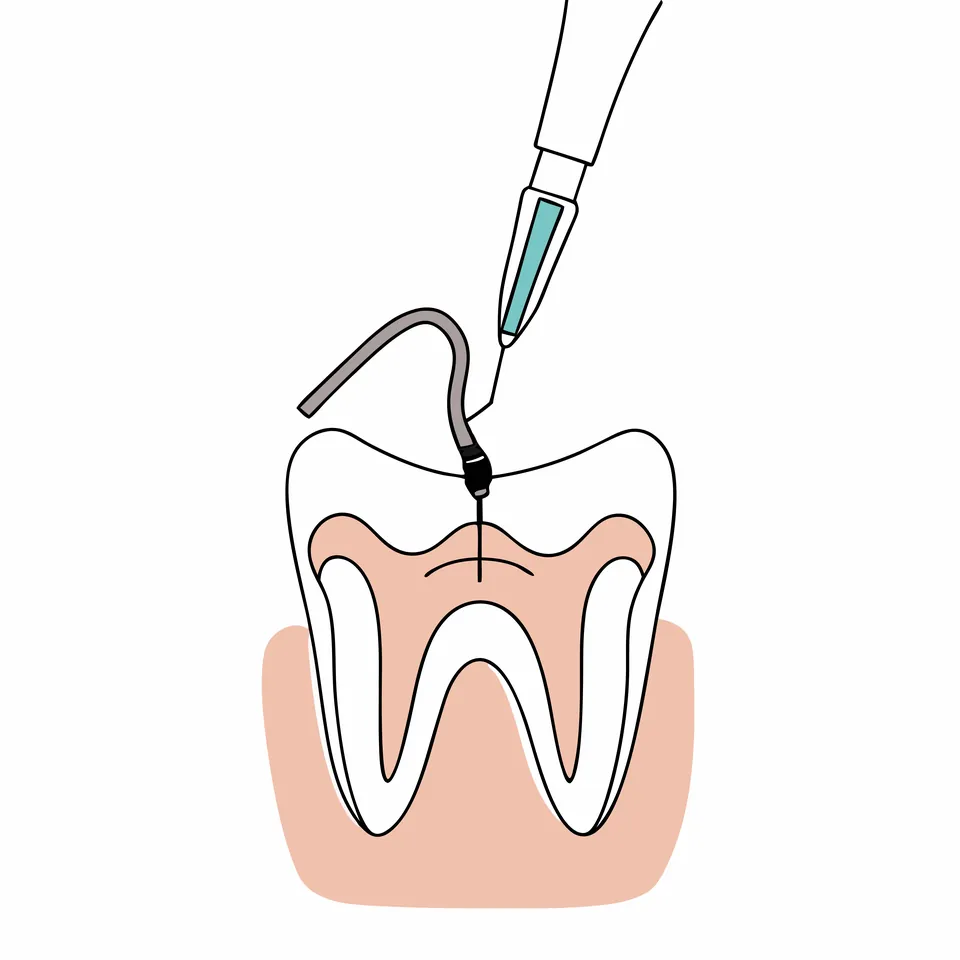
- Exam and X-raysYour dentist checks the tooth, the roots and the bone around it on X-rays, and asks about your health and any medicines you take.
- Talk through optionsYou hear whether the tooth can be saved, what removal involves, and how you might replace it. You get a written estimate.
- FreezingLocal anaesthetic numbs the tooth and gum. You will feel pressure but should not feel sharp pain. Raise a hand if you do.
- Removing the toothFor a simple extraction the tooth is loosened and lifted out. For a surgical one, the gum is opened, and the tooth may be divided and removed in parts.
- Closing and gauzeStitches may be placed. You bite on gauze to help a blood clot form, which protects the socket while it heals.
- Home care and checkYou leave with written instructions. We check healing if needed and plan any replacement once the area settles.
How it compares
| Question | Extraction | Root canal treatment | Monitoring the tooth |
|---|---|---|---|
| Keeps your natural tooth | No | Yes, if enough tooth remains | Yes, for now |
| Treats infection | Yes, by removing the source | Yes, by cleaning inside the tooth | No |
| Usually needs a replacement | Often an implant, bridge or denture | Often a crown | Not yet |
| When it fits | Tooth cannot be repaired | Tooth is infected but can be restored | No symptoms, small risk |
General information. Your dentist will explain what applies to you.
Benefits and risks
Benefits
- Removes the source of pain or infection when a tooth cannot be repaired
- Creates space so braces or aligners can move teeth into place
- Lets you start planning a replacement, such as an implant or bridge
- Protects nearby teeth and gums from a failing tooth
Risks and limits
- Dry socket: if the blood clot comes loose, the socket can become very sore a few days later
- Bleeding, swelling and bruising, which are more common after a surgical extraction
- Infection in the socket, which may need more care or medicine
- Rarely, numbness of the lip, chin or tongue if a root sits near a nerve
- Once a tooth is out, nearby teeth can drift unless the gap is managed
Cost and coverage
The cost of an extraction depends mainly on how the tooth comes out. A tooth that lifts out in one piece is a simpler procedure than one that needs the gum opened, bone removed or the tooth divided, and the Ontario Dental Association fee guide lists these as different services. X-rays and any other planned steps are separate items. Oral surgery is a covered category under the Canadian Dental Care Plan, and we also accept IFHP and bill all insurance plans directly. Some plans ask for a predetermination first, which we can send for you. If you have no coverage, ask about our in-house dental plan and student program. You will get a written estimate before the extraction.
What shapes your estimate
- Whether the extraction is simple or surgical
- How many teeth are being removed
- X-rays needed to see the roots and bone
- Whether any step is planned to prepare for an implant
- Your insurance, CDCP or IFHP coverage for oral surgery
Read more about insurance and payment, the Canadian Dental Care Plan and IFHP coverage.
After your visit
- Bite firmly on gauze for about 30 minutes, and use a fresh piece if the socket oozes again
- Do not rinse, spit hard, smoke or use a straw for the first day, so the clot can stay in place
- From the next day, rinse gently with warm salt water a few times a day
- Eat soft food and chew on the other side until the area feels settled
- Call us if pain gets worse after day two or three, or if bleeding will not stop
Questions
Will I be awake during an extraction?
Yes, most extractions are done with local anaesthetic, so you are awake but the area is numb. You will feel pressure and some movement, but should not feel sharp pain. If you are very anxious, tell us before the day. Sedation options are available for some treatments; we'll talk through what suits you.
What is the difference between a simple and a surgical extraction?
A simple extraction removes a tooth you can see above the gum. A surgical extraction is needed when the tooth is broken off, has hooked roots or is partly in bone, so the gum is opened to reach it. Your dentist will tell you which one you need after looking at X-rays.
How long does it take to heal?
Most people feel much better within a few days, and the gum closes over the socket in a couple of weeks. The bone underneath takes several months to fill in. Your dentist will tell you when the area is ready for an implant or other replacement.
Should I replace a tooth after it is removed?
Often, yes, especially if it is a back tooth you chew with or a front tooth you see when smiling. A gap can let nearby teeth tip or drift. Your dentist will explain implants, bridges and dentures and which suits your mouth.
Why do I need teeth removed before braces?
When there is not enough room in the jaw, removing one or more teeth can give the others space to line up. This is planned with the person providing your orthodontic treatment so the right teeth come out at the right time.
Can I take my usual medicines before an extraction?
Tell us about every medicine you take, especially blood thinners. Do not stop any medicine on your own. Your dentist may check with your doctor about what to do.
Reviewed by the dentists at Aurora Gateway Dental Care. Last updated November 12, 2026. This page is general information, not personal medical advice.
Your dentists
Five dentists share the care at our clinic. Your dentist will explain your options at your exam.
Meet the team →Trusted health information
Related treatments
Patients visit from
Newmarket · Richmond Hill · Oak Ridges, Richmond Hill · East Gwillimbury · Holland Landing · Mount Albert · King City · Nobleton · Stouffville · Bradford
Ask us about oral surgery
(289) 475-5497Prefer to type? Send a request and we'll contact you to confirm a time.
676 Wellington Street East, Unit 3
Aurora, ON L4G 0K3