Overbite, Underbite and Crossbite: Bite Problems Explained
By Aurora Gateway Dental Care · Published October 29, 2026 · Updated October 29, 2026 · Reviewed by our dentists
The short answer
An overbite is when the upper front teeth overlap the lower ones too much. An underbite is when the lower teeth sit in front of the upper teeth, and a crossbite is when some upper teeth sit inside the lower ones. These bite problems can affect chewing, wear and cleaning, and are usually treated with braces or aligners.
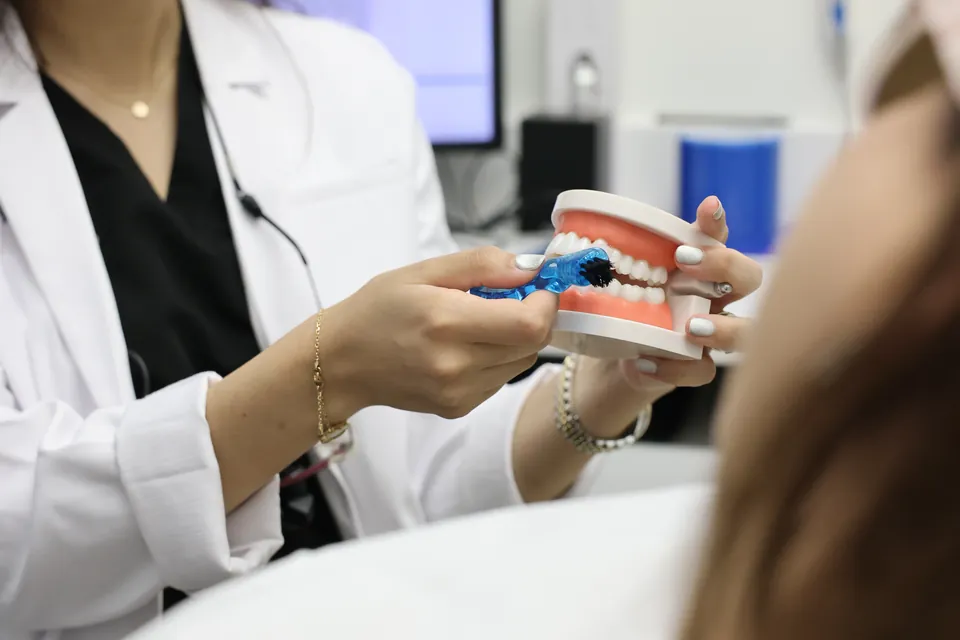
What a typical bite looks like
When you close your back teeth together, the upper teeth normally sit slightly outside the lower teeth all the way around. At the front, the upper teeth overlap the lower ones by a small amount, both up and down and front to back. The midlines between the two front teeth on the upper and lower jaws roughly line up.
Few people have a textbook bite, and small differences, including a slight overbite, are normal. Dentists call a bite that is clearly off a malocclusion. It can involve the teeth, the jaws or both.
Overbite: when the upper teeth cover too much
An overbite, sometimes called a deep bite, is when the upper front teeth cover too much of the lower front teeth when you bite down. In a severe overbite, the lower front teeth may bite into the gum behind the upper teeth or the roof of the mouth.
People often use 'overbite' to describe upper teeth that stick out. Dentists call that overjet. The two often go together but are measured differently. Protruding upper front teeth are more likely to chip or break in a fall or sports injury.
Underbite, crossbite and open bite
- Underbite: the lower front teeth sit in front of the upper front teeth. It can come from the teeth, a lower jaw that grew forward, an upper jaw that grew less, or a mix.
- Crossbite: one or more upper teeth bite inside the lower teeth. It can affect a single front tooth or the back teeth on one or both sides. A back crossbite can make the jaw shift to one side when closing.
- Open bite: the front teeth don't meet when the back teeth are together. It is often linked to long-term thumb sucking, pacifier use or tongue habits in childhood.
- Crooked teeth, crowding and spacing: teeth that overlap, twist or have gaps because of a mismatch between tooth size and jaw size.
What causes bite problems?
Many bite problems are inherited. The size and shape of the jaws and teeth tend to run in families. Others are shaped by habits and events, such as thumb or finger sucking past the early years, early loss of baby teeth, an injury, or breathing through the mouth for long periods because of a blocked nose. Teeth can also drift and tip after an adult tooth is lost and not replaced.
Why it can matter
Not every bite issue needs treatment. Some are purely about appearance, and that is a valid reason too. Others affect your health over time:
- Uneven wear, chipping or cracking of teeth that hit too hard
- Crowded or crooked teeth that are harder to clean, raising the risk of decay and gum disease
- Gum damage from a deep overbite
- Difficulty biting or chewing some foods
- Muscle tension or jaw discomfort in some people
How bite problems are treated
Treatment starts with an orthodontic exam, photos, X-rays and a digital scan of your teeth. Then options are explained based on what is causing the problem.
Traditional metal braces and tooth-coloured ceramic braces can correct a wide range of bite problems. Clear aligners can treat many cases, especially in teens and adults, and are worn at least 20 to 22 hours a day. Elastics are often added to help line up the upper and lower jaws. In growing children, an expander may widen a narrow upper jaw to correct a crossbite.
When an adult's bite problem comes mainly from jaw size or position, braces alone may not be enough. Some people choose a combined plan with jaw surgery, which involves referral to a surgeon. Others accept a compromise that improves the bite without surgery. At the end of any treatment, retainers keep the teeth from shifting back.
Timing for children and adults
The Canadian Dental Association suggests an orthodontic check by about age 7, when early signs such as crossbites and severe crowding can be spotted. Some problems are easier to guide while the jaws are still growing. Our article on the right age to start orthodontic treatment covers this in detail.
Adults can have orthodontic treatment at any age as long as the teeth and gums are healthy. Gum health is checked first, and any decay or gum disease is treated before teeth are moved.
Bite assessments in Aurora
At Aurora Gateway Dental Care, Dr. Farhad Sobouti, DDS, MSc (Orthodontics), FRCDC, provides our orthodontic treatment, including traditional braces, ceramic braces and clear aligners. If you're in Aurora or nearby and wondering about your own bite or your child's, call 289-475-5497 to book an assessment. You'll get a written estimate before treatment begins.
Questions
Is a small overbite normal?
Yes. A small overlap of the upper front teeth over the lower ones is normal and healthy. It's only considered a problem when the overlap is large or causes damage or discomfort.
Can an underbite be fixed without surgery?
Often, yes, especially in children and when the cause is mainly the teeth. In adults with a large jaw difference, surgery may be the most complete fix, though braces or aligners can sometimes improve it. Your dentist will explain what is realistic for you.
Can clear aligners fix a crossbite?
Aligners can correct many mild to moderate crossbites caused by tooth position. A crossbite from a narrow upper jaw may need an expander, especially in children. An exam and scan show which approach suits your case.
Does a bite problem cause jaw pain?
It can contribute in some people, but jaw pain has many causes, including clenching, grinding and stress. If your jaw hurts, ask your dentist to check both your bite and your jaw joints.
General information, not personal medical advice. If you have pain, swelling or an injury, call us at 289-475-5497.