
Dental Cleanings in Aurora
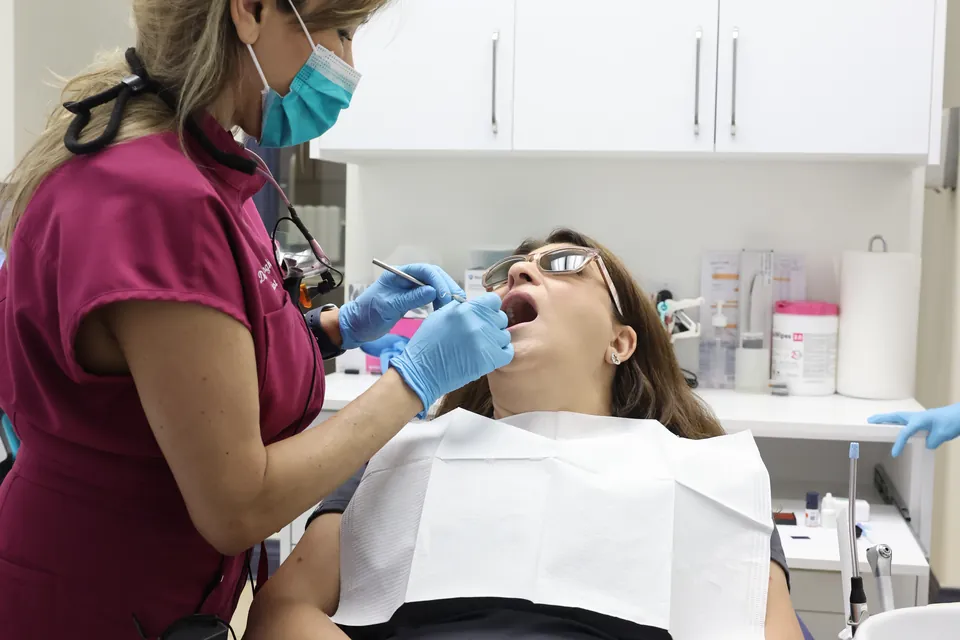
A dental cleaning is the hygiene part of your visit, when plaque and tartar come off your teeth. It is steady, gentle work, and we can pause whenever you need.
The short answer
A dental cleaning in Aurora at Aurora Gateway Dental removes plaque and hardened tartar from your teeth above and just below the gumline, then polishes the surfaces. Your gums are measured and you are shown where brushing misses. Most people need a cleaning once or twice a year, but some need it more often.
- Visits
- One visit, repeated once or twice a year or as advised
- Timeline
- Depends on how much buildup there is
- Comfort
- Breaks whenever you need; freezing rarely needed
- Coverage
- Often covered by insurance and CDCP, with yearly limits
- Dentist
- Our dentists
At a glance
What it is
A cleaning removes the soft plaque and hard tartar (also called calculus) that brushing and flossing leave behind. At our clinic, our hygienists provide cleanings. Once plaque hardens into tartar, a toothbrush cannot remove it. Left in place, tartar irritates the gums and can lead to gum disease.
During the cleaning, the hygienist uses a small ultrasonic scaler, hand instruments, or both. The scaler vibrates and sprays water to loosen buildup. Hand tools remove what is left. Then your teeth are polished and flossed. The hygienist also measures the small spaces between your gums and teeth. These numbers show whether your gums are healthy or starting to pull away.
A routine cleaning is for gums that are healthy or only mildly inflamed (gingivitis). If deeper pockets are found, you may need a deeper treatment over more than one visit, which is covered on our periodontics page. Your exam, X-rays and screenings are part of preventive dentistry and are often booked on the same day.
Is it right for me?
- Your gums bleed a little when you brush or floss.
- It has been six months or more since your last cleaning.
- You see yellow or brown buildup near the gumline, often behind the lower front teeth.
- You have bad breath that brushing does not fix.
- You wear braces, a bridge or implants, which trap plaque more easily.
- You are pregnant, have diabetes or smoke, all of which affect gum health.
Step by step
- Quick check-inThe hygienist asks how your teeth and gums have felt and whether anything is sensitive. Tell us about sore spots so we can go slowly there.
- Gum measurementsA thin, blunt probe measures the space around each tooth. The numbers go in your chart so we can compare them next time.
- ScalingTartar is removed with an ultrasonic scaler and hand instruments. You may feel scraping and vibration. Raise your hand any time you want a break.
- PolishingA gritty paste on a soft rubber cup smooths the tooth surfaces. This lifts surface stains and makes it harder for plaque to stick.
- Flossing and tipsThe hygienist flosses between your teeth and points out areas you tend to miss. You may get tips on brushing angle, floss or small brushes.
How it compares
| Question | Routine cleaning | Scaling and root planing | Periodontal maintenance |
|---|---|---|---|
| Suits | Healthy gums or gingivitis | Active gum disease | After gum disease treatment |
| Where it cleans | Above and just below gums | Deep below gums, on roots | Below gums, ongoing |
| Freezing | Rarely | Often | Sometimes |
| How often | Often 1 to 2 times a year | Once, over 1 or more visits | Often every 3 to 4 months |
General information. Your dentist will explain what applies to you.
Benefits and risks
Benefits
- Removes tartar that brushing cannot reach or loosen.
- Helps reverse early gum inflammation before it becomes gum disease.
- Lifts surface stains from coffee, tea and food.
- Gives you a record of gum measurements to track changes over time.
- Leaves your mouth feeling smooth and fresh.
Risks and limits
- Your gums may feel tender or bleed a little for a day, especially if they were inflamed.
- Teeth can feel sensitive to cold for a short time after tartar is removed.
- A routine cleaning cannot fix gum disease that has already formed deep pockets. That needs a different treatment.
- Polishing removes surface stains but does not change the natural colour of your teeth.
- People with a few specific heart conditions may need antibiotics before a cleaning. Tell us about your health history so your dentist can check.
Cost and coverage
The cost of a cleaning depends mostly on how long the hygienist needs. Scaling is billed in time units under the Ontario Dental Association fee guide, so a mouth with more tartar takes more units. Many insurance plans cap the number of units each year, and we can check your plan before your visit. We direct bill all insurance plans and accept CDCP and IFHP. CDCP may need approval in advance for scaling beyond its set limits. If you have no coverage, ask about our in-house dental plan and student program. If you need more than a routine cleaning, you get a written estimate before treatment.
What shapes your estimate
- How much tartar has built up since your last visit
- Time needed, which is billed in units of scaling time
- Whether polishing and fluoride are part of the visit
- Whether your gum measurements show you need deeper care
- Your insurance limits on scaling units per year
Read more about insurance and payment, the Canadian Dental Care Plan and IFHP coverage.
After your visit
- If your gums are tender, rinse with warm salt water and use a soft toothbrush for a day or two.
- Try a toothpaste for sensitive teeth if cold drinks bother you.
- Keep flossing even if your gums bleed a little. Bleeding usually settles as gums get healthier.
- Book your next cleaning at the interval your hygienist suggests.
Questions
How often should I get my teeth cleaned?
Many people need a cleaning once or twice a year. If you build tartar quickly or have had gum disease, you may need it more often. Your hygienist and dentist will suggest what fits your mouth.
Does a cleaning hurt?
Most people feel pressure, scraping and some vibration rather than pain. If your gums are inflamed or your teeth are sensitive, it can feel uncomfortable. Tell your hygienist, and they can slow down, change tools or take breaks.
Why do my gums bleed during a cleaning?
Bleeding usually means the gums are inflamed from plaque. It often improves within a couple of weeks of good brushing and flossing. If it keeps happening, your dentist will check for gum disease.
What is the difference between a cleaning and a deep cleaning?
A routine cleaning removes buildup above and just under the gumline. A deep cleaning, called scaling and root planing, goes further below the gums to clean and smooth the roots. It is used to treat gum disease.
Will a cleaning make my teeth whiter?
Polishing removes surface stains, so your teeth may look brighter. It does not change the colour inside the tooth. If you want a lighter shade, ask about teeth whitening.
Can I get a cleaning while I am pregnant?
Yes. Cleanings are considered safe during pregnancy and are often helpful, because hormone changes can make gums swell and bleed. Let us know you are pregnant when you book.
Reviewed by the dentists at Aurora Gateway Dental Care. Last updated October 28, 2026. This page is general information, not personal medical advice.
Your dentists
Five dentists share the care at our clinic. Your dentist will explain your options at your exam.
Meet the team →Trusted health information
Related treatments
Patients visit from
Newmarket · Oak Ridges, Richmond Hill · East Gwillimbury · King City · Stouffville
Ask us about dental cleanings
289-475-5497Prefer to type? Send a request and we'll contact you to confirm a time.
676 Wellington Street East, Unit 3
Aurora, ON L4G 0K3