Wisdom Teeth Removal in Aurora
Not every wisdom tooth needs to come out. We look at how yours are growing, explain what we see on the X-ray, and help you decide.
The short answer
Wisdom teeth removal at Aurora Gateway Dental Care in Aurora starts with an exam and X-ray to see how each third molar sits. If a wisdom tooth is impacted, keeps getting infected or is harming the tooth beside it, your dentist may recommend removal. Complex cases may be referred, and we'll explain why.
- Visits
- 1 assessment visit, then 1 removal visit if needed
- Timeline
- Depends on how many teeth and how deeply they sit
- Comfort
- Local anaesthetic; plan a few quiet days to recover
- Coverage
- Insurance, CDCP (oral surgery category) and IFHP
- Dentist
- Our dentists
At a glance
What it is
Wisdom teeth are the third set of molars, at the very back of the mouth. They usually show up in the late teens or early twenties, long after the other adult teeth. Many jaws do not have quite enough room for them, so they may come in crooked, only partway, or not at all. A tooth that stays trapped in the bone or gum is called impacted.
Some wisdom teeth grow in straight, can be cleaned well and never cause trouble. Others sit at an angle and push against the molar in front, trap food under a flap of gum, or decay because a toothbrush cannot reach them. A partly erupted tooth can lead to a painful gum infection called pericoronitis, which often comes back. Less often, a sac around a buried tooth can form a cyst.
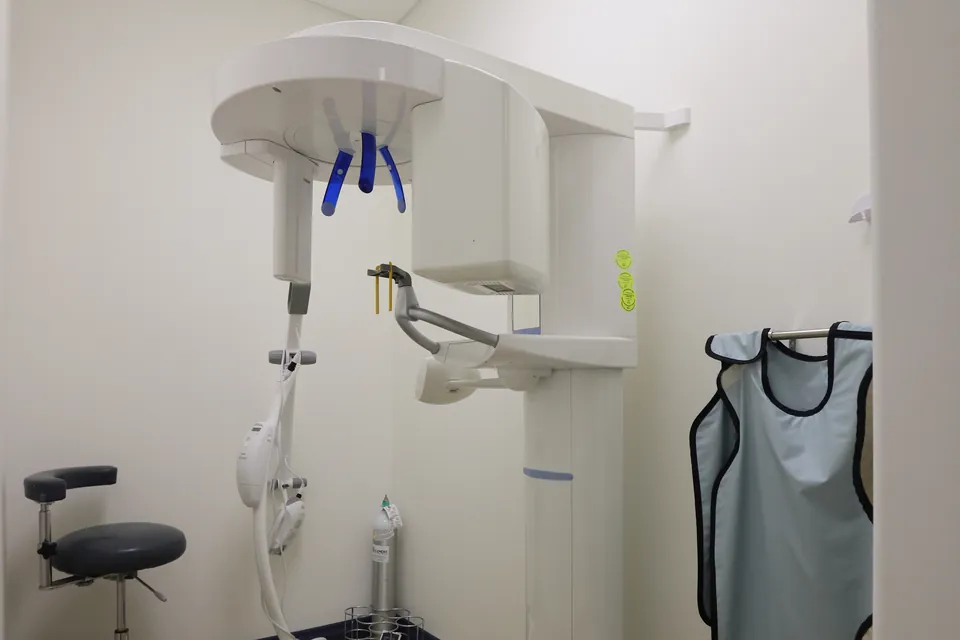
That is why the X-ray matters so much. It shows the angle of each wisdom tooth, how deep it sits, how its roots are shaped, and how close it is to the nerve that gives feeling to your lower lip and chin. Your dentist uses this to decide whether removal makes sense now, later, or not at all.
We offer both simple and surgical extractions here, and that includes many wisdom teeth. Complex cases may be referred, and we'll explain why. Sedation options are available for some treatments; we'll talk through what suits you.
Is it right for me?
- You feel pain, pressure or swelling at the very back of your jaw
- The gum over a back tooth keeps getting sore, puffy or has a bad taste
- Food gets stuck behind your last molar and you cannot clean it well
- An X-ray shows a wisdom tooth tipped against the molar in front
- Your orthodontic or other dental plan calls for wisdom teeth to be assessed
- You are in your late teens or twenties and have never had them checked
Step by step
- Assessment and X-rayYour dentist examines the back of your mouth and takes an X-ray that shows each wisdom tooth, its roots and the nearby nerve.
- Decide togetherYou hear which teeth, if any, should come out, which can be watched, and whether removal is done here or by referral.
- Prepare for the dayPlan to rest for the rest of the day, stock up on soft food, and arrange a ride if you would feel more at ease.
- RemovalAfter freezing, the gum is opened if needed and the tooth is removed, sometimes in sections. Stitches may be placed.
- Recovery checkWe give you written home-care steps and check healing if needed, especially if stitches need to come out.
How it compares
| Question | Remove now | Watch with regular X-rays | Wait for symptoms |
|---|---|---|---|
| Suited to | Impacted or repeatedly infected teeth | Straight teeth that can be cleaned | Not usually advised |
| Recovery | A few days of swelling and soreness | None | Removal may be harder later |
| Risk to the next molar | Removed | Checked at each visit | Decay or damage may go unseen |
| Follow-up | Healing check if needed | Checkups with X-rays as advised | Often an urgent visit |
General information. Your dentist will explain what applies to you.
Benefits and risks
Benefits
- Ends repeated gum infections around a partly erupted tooth
- Protects the molar in front from decay and root damage
- Makes the back of your mouth easier to brush and floss
- Removing a problem tooth while you are younger usually means an easier recovery
Risks and limits
- Swelling and jaw stiffness are common and usually peak on day two or three
- Dry socket, more often in the lower jaw and in people who smoke
- Numbness of the lip, chin or tongue if roots sit close to the nerve; usually short term, rarely lasting
- Upper wisdom teeth sit near the sinus, and a small opening can rarely form that needs follow-up
- Leaving an impacted tooth in place means it needs watching for changes over time
Cost and coverage
Wisdom tooth removal is priced tooth by tooth, and the biggest factor is how each one sits. A wisdom tooth that has fully come in is a simpler removal than one covered by gum, and one buried in bone is a more involved procedure again; the Ontario Dental Association fee guide treats each of these differently. The assessment exam and X-ray are separate. Oral surgery is a covered category under the Canadian Dental Care Plan, though some services need approval first, and we accept IFHP and bill all insurance plans directly. If you are referred to an oral surgeon, that office will give you its own estimate. For removal here, you get a written estimate before the day.
What shapes your estimate
- How many wisdom teeth are being removed
- Whether each tooth is fully erupted, partly erupted or buried in bone
- The X-ray needed to plan the removal
- Whether removal is done here or by an oral surgeon
- Your insurance, CDCP or IFHP coverage
Read more about insurance and payment, the Canadian Dental Care Plan and IFHP coverage.
After your visit
- Hold an ice pack wrapped in a cloth against your cheek, on and off, for the first day to limit swelling
- Sleep with your head raised on an extra pillow for the first couple of nights
- Stick to cool, soft food such as yogurt, soup and eggs for a few days, and avoid crunchy bits that can lodge in the socket
- Gently open and close your jaw after the first day or two to ease stiffness
- Plan a few quiet days away from sports, heavy lifting and hard workouts
Questions
Do all wisdom teeth need to come out?
No. If a wisdom tooth has come in straight, you can clean it, and it is not harming nearby teeth, your dentist may suggest leaving it and checking it with X-rays. Removal is recommended when a tooth causes, or is likely to cause, problems.
At what age should wisdom teeth be checked?
The late teens are a good time for a first look, since the roots are still forming and an X-ray shows how the teeth are heading. Removal, when needed, tends to be simpler for younger patients. Adults of any age can still be assessed.
How long will my face be swollen?
Swelling usually builds over the first two to three days and then goes down over the next several days. Some bruising on the cheek is possible. Ice on the first day and keeping your head raised can help.
Can I go to school or work the next day?
Many people need two or three days to rest, especially after lower wisdom teeth or several removed at once. Your dentist will give you a better idea based on your X-ray and how many teeth are coming out.
Will I be put to sleep?
Most removals are done with local anaesthetic, so you are awake but numb. Sedation options are available for some treatments; we'll talk through what suits you. Complex cases may be referred, and we'll explain why.
What if my wisdom tooth is hurting right now?
Call us at 289-475-5497. If we're closed, follow the instructions on our line. A sore, swollen gum flap around a wisdom tooth is often treated first by cleaning the area and settling the infection, and removal is planned once it calms down. If swelling affects your breathing or swallowing, call 911.
Reviewed by the dentists at Aurora Gateway Dental Care. Last updated October 28, 2026. This page is general information, not personal medical advice.
Your dentists
Five dentists share the care at our clinic. Your dentist will explain your options at your exam.
Meet the team →Trusted health information
Related treatments
Patients visit from
Newmarket · Oak Ridges, Richmond Hill · East Gwillimbury · King City · Stouffville
Ask us about wisdom teeth removal
289-475-5497Prefer to type? Send a request and we'll contact you to confirm a time.
676 Wellington Street East, Unit 3
Aurora, ON L4G 0K3