Preventive Dentistry in Aurora
Preventive dentistry is the quiet work that keeps small problems small. At Aurora Gateway Dental, it covers your exam, X-rays when needed, fluoride, sealants and an oral cancer screening.
The short answer
Preventive dentistry in Aurora at Aurora Gateway Dental includes a dental exam, X-rays only when your dentist needs them, fluoride, sealants for grooved back teeth and an oral cancer screening. The goal is to find decay, gum changes and other problems early, while they are easier to treat. Your cleaning is its own hygiene visit.
- Visits
- One visit, repeated at the interval your dentist suggests
- Timeline
- Usually part of a regular check-up
- Comfort
- No freezing needed
- Coverage
- Often covered by insurance and CDCP, with limits on how often
- Dentist
- Our dentists
At a glance
What it is
Preventive dentistry is everything your dentist does to find problems before they grow. Most of it happens at your regular check-up. Your dentist looks at each tooth, your gums, your bite and the soft tissues of your mouth. They compare what they see today with your past records, so slow changes do not slip by.
This page covers the dentist's side of prevention: the exam, X-rays, fluoride, sealants and an oral cancer screening. Your cleaning with the hygienist is a separate service with its own page. Many people book both on the same day, but they do different jobs. The cleaning removes buildup. The exam finds problems and plans care.
X-rays show what eyes cannot see, such as decay between teeth, decay under old fillings and bone loss around roots. We use digital X-rays, and your dentist decides if you need them and how often, based on your age, your risk and any symptoms. Not every visit needs new images.
Fluoride and sealants add a layer of protection. Fluoride helps harden enamel and can slow very early decay. Sealants are a thin coating that fills the deep grooves on back teeth, where food and plaque hide from a toothbrush.
Is it right for me?
- You have not had a dental exam in a year or more.
- You are new to Aurora and need a dentist to set a baseline for your teeth and gums.
- Your child has new back teeth with deep grooves that are hard to brush.
- You get cavities often, have a dry mouth, or take medicine that reduces saliva.
- You smoke, vape or drink alcohol often, which makes an oral cancer screening more important.
- You feel fine and want to keep it that way.
Step by step
- Health historyWe ask about your health, medicines and any changes since your last visit. Conditions like diabetes or pregnancy change what your dentist looks for.
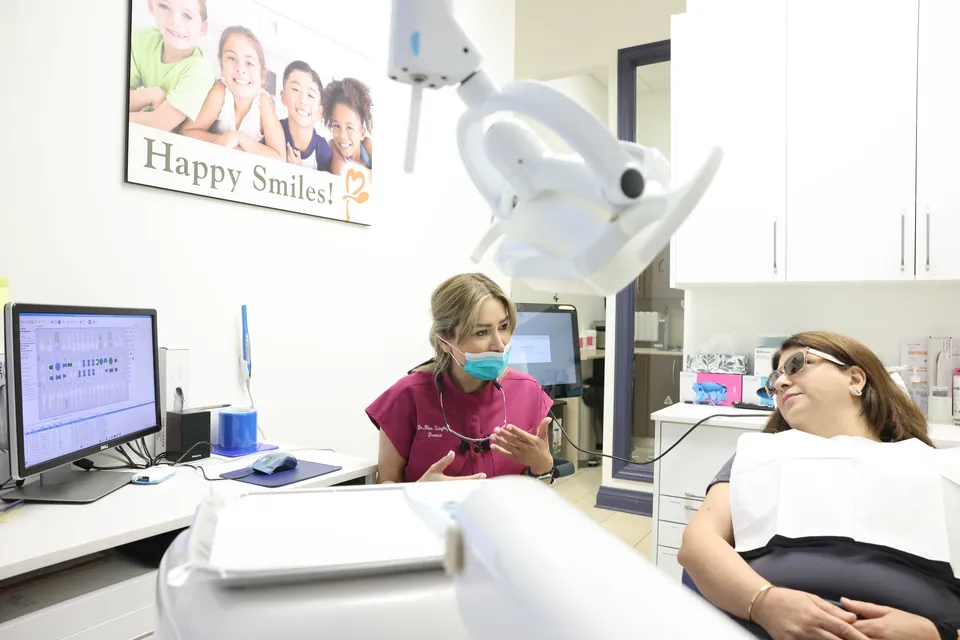
- ExamYour dentist checks every tooth, your fillings and crowns, your bite and your jaw joints. They also note any wear from grinding.
- X-rays, if neededIf your dentist needs a closer look, we take X-rays. They tell you why, and you can ask questions first.
- Oral cancer screeningYour dentist looks at your tongue, cheeks, lips and throat, then gently feels your jaw and neck. It takes only a few minutes.
- Fluoride or sealantsIf they will help, fluoride is brushed or painted on, and sealants are placed on clean, dry back teeth. Neither needs freezing.
- Your planYou leave knowing what is healthy, what to watch and what, if anything, needs treatment. If you need treatment, you get a written estimate first.
How it compares
| Question | Exam and screening | Fluoride | Sealants |
|---|---|---|---|
| What it does | Finds problems early | Strengthens enamel | Shields deep grooves |
| Who it suits | Everyone, all ages | People at higher cavity risk | Mostly kids and teens |
| Time | Part of your check-up | A few minutes | A few minutes per tooth |
| Freezing | No | No | No |
General information. Your dentist will explain what applies to you.
Benefits and risks
Benefits
- Problems found early usually need smaller, simpler treatment.
- Your records build a picture over time, so slow changes get noticed.
- Sealants and fluoride add protection where brushing struggles to reach.
- An oral cancer screening is quick and part of the visit.
- You get a clear plan and can decide on next steps without pressure.
Risks and limits
- Dental X-rays use a very low dose of radiation. Your dentist takes them only when they will help with your care.
- Sealants can wear or chip over time and need checking at each visit.
- Fluoride is safe in the amounts used, but young children should not swallow it, so we use small amounts.
- An exam cannot catch everything. Call us if something changes between visits.
- Prevention works well only with daily brushing and flossing at home.
Cost and coverage
Preventive care is usually the most predictable part of your dental costs. Fees follow the Ontario Dental Association fee guide, and what you pay depends on which services your dentist recommends at this visit. Many insurance plans cover exams, X-rays, fluoride and sealants, often with limits on how often. We direct bill all insurance plans, and we accept the Canadian Dental Care Plan (CDCP) and the Interim Federal Health Program (IFHP). If you have no insurance, ask about our in-house dental plan and student program. If anything beyond the exam is recommended, you get a written estimate before we start.
What shapes your estimate
- Whether you are a new patient or a returning one
- Whether X-rays are needed, and which kind
- How many teeth need sealants
- Whether fluoride is recommended for your risk level
- Your insurance plan's limits on how often exams and X-rays are covered
Read more about insurance and payment, the Canadian Dental Care Plan and IFHP coverage.
After your visit
- After fluoride, follow the eating and drinking instructions your dentist gives you. They depend on the type of fluoride used.
- After sealants, you can eat normally. Avoid chewing ice or hard candy, which can chip them.
- Brush twice a day for two minutes with fluoride toothpaste and clean between your teeth daily.
- Book your next check-up at the interval your dentist suggests.
Questions
How often do I need a dental exam?
There is no single schedule that suits everyone. Many people come once or twice a year, and some need more frequent visits. Your dentist will suggest timing based on your teeth, gums and health.
Do I need X-rays at every visit?
No. Your dentist takes X-rays only when they will give information needed for your care. How often depends on your age, your risk of decay and any symptoms. New patients often have X-rays to set a starting point.
Are sealants only for kids?
Sealants are most often placed on children's and teens' back teeth soon after they come in. Some adults with deep grooves and no fillings may also benefit. Your dentist will tell you if your teeth are good candidates.
What happens during an oral cancer screening?
Your dentist looks at your lips, cheeks, tongue, gums and the roof and floor of your mouth. They gently feel your jaw and neck for lumps. If anything looks unusual, they explain what it might be and what to do next.
Is the exam the same as a cleaning?
No. The exam is done by your dentist, who checks for problems and plans care. The cleaning removes plaque and tartar. They are often booked together but are separate services.
Can I bring my whole family?
Yes. We see children and adults. Let our front desk know who is coming when you call, and they will help find times that work.
Reviewed by the dentists at Aurora Gateway Dental Care. Last updated November 12, 2026. This page is general information, not personal medical advice.
Your dentists
Five dentists share the care at our clinic. Your dentist will explain your options at your exam.
Meet the team →Trusted health information
Related treatments
Patients visit from
Newmarket · Richmond Hill · Oak Ridges, Richmond Hill · East Gwillimbury · Holland Landing · Mount Albert · King City · Nobleton · Stouffville · Bradford
More about preventive dentistry
Ask us about preventive dentistry
(289) 475-5497Prefer to type? Send a request and we'll contact you to confirm a time.
676 Wellington Street East, Unit 3
Aurora, ON L4G 0K3