Dental Implants in Aurora
A dental implant replaces a missing tooth from the root up. We check your bone, gums and health first, then explain every option before you decide.
The short answer
A dental implant is a small titanium post placed in the jawbone to replace a missing tooth root. Once the bone heals around it, a custom crown, bridge or denture attaches on top. At Aurora Gateway Dental in Aurora, an exam and X-rays come first to see whether an implant suits your mouth.
- Visits
- Several visits over a few months
- Timeline
- Usually several months from placement to final crown
- Comfort
- Local anaesthetic; we check in often and pause when you need
- Coverage
- Often partly covered or not covered; we can send a predetermination
- Dentist
- Dr. Kourosh Rahimi, DDS
At a glance
What it is
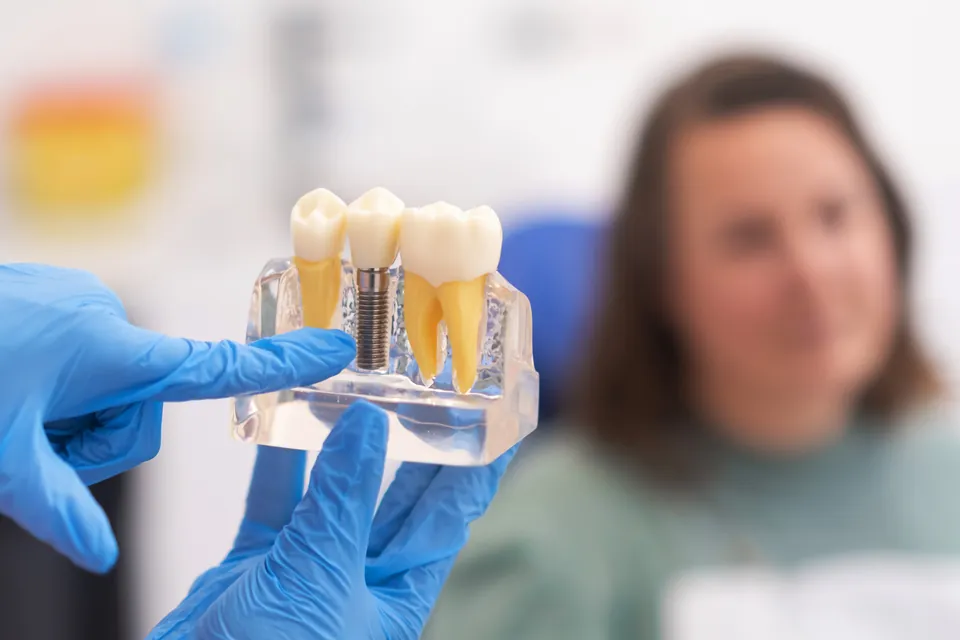
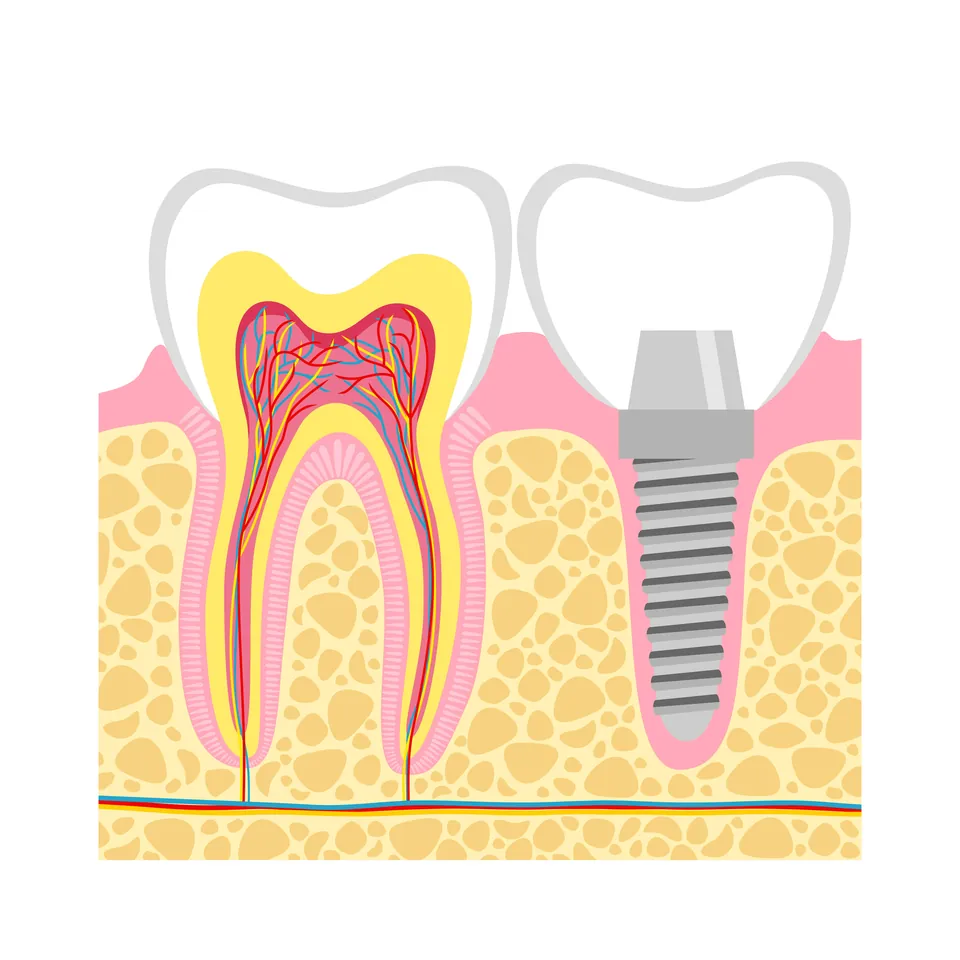
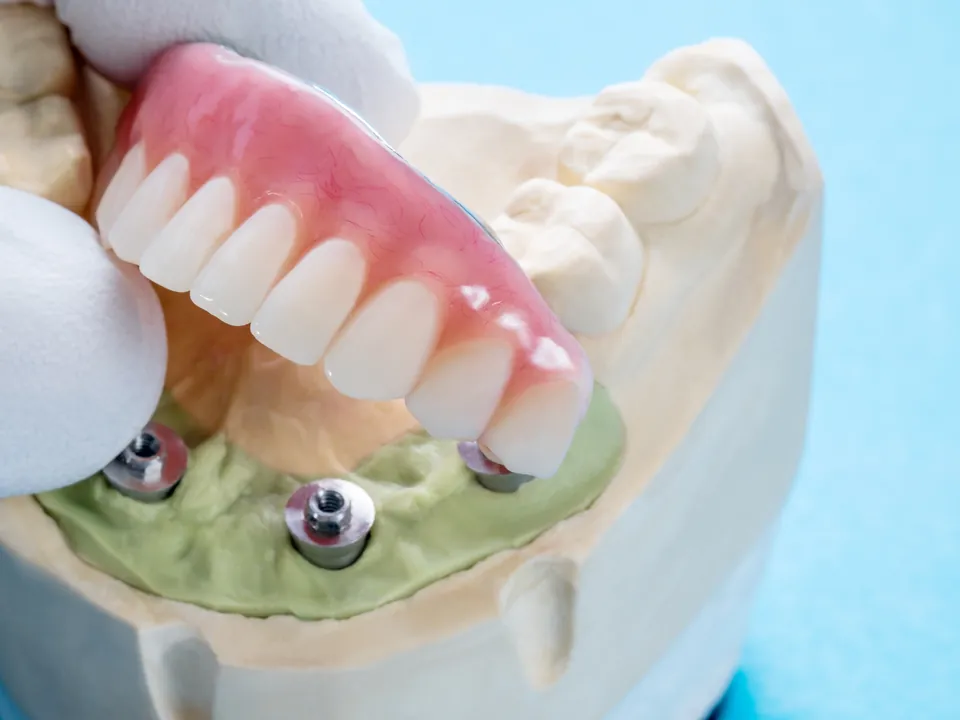
A dental implant replaces the root of a missing tooth. It is a small titanium post that sits in the jawbone under the gum. Over several months, the bone grows snugly around it. Once it has healed, a connector called an abutment is attached, and a custom crown goes on top. The crown is the part you see and chew with.
Implants can replace one tooth, several teeth, or a full arch. They can also hold a bridge, or help a loose denture snap firmly into place. Because each implant stands on its own, the healthy teeth beside the gap do not need to be filed down to support it, as they would for a regular bridge.
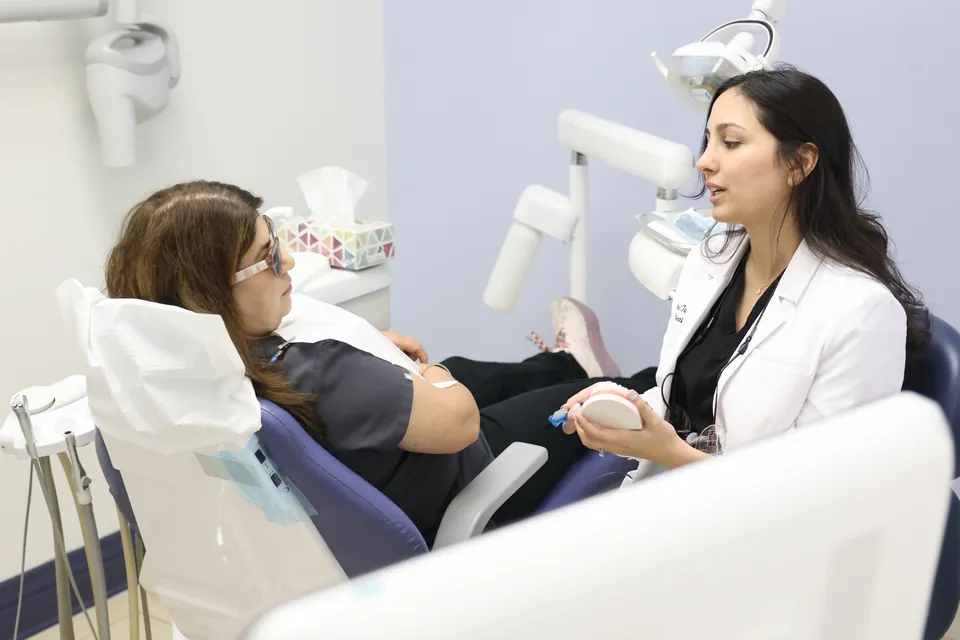
Dr. Kourosh Rahimi, whose training focuses on implant dentistry, completed the UCLA Master Program in Implant Dentistry. Before suggesting an implant, your dentist looks closely at your bone, gums, bite and medical history. Some people need a bone graft or gum treatment first. Others are better served by a bridge or a denture. We explain each choice in plain words so you can pick what fits your mouth, your health and your budget.
Is it right for me?
- You have one or more missing teeth and want a fixed tooth that does not come out.
- Your gums are healthy, or you are willing to treat gum disease first.
- You have enough jawbone to hold an implant, or you are open to a bone graft.
- Your general health allows minor oral surgery and normal healing.
- You do not smoke, or you are ready to stop while the implant heals.
- Your lower denture slides around and you would like it to stay put.
Step by step
- Exam and X-raysWe check your teeth, gums and bone and take X-rays. If 3D imaging is needed for planning, we explain why before anything is booked.
- Written planYou receive a written plan showing each stage, the expected timeline and the cost. We can send it to your insurer for a predetermination.
- Placing the implantThe area is numbed with local anaesthetic and the post is placed in the bone. We tell you what is happening and stop whenever you raise your hand.
- HealingBone bonds to the implant over a few months. Where it makes sense, a temporary tooth fills the space while you heal.
- Abutment and crownOnce healed, the connector is attached and your custom crown is fitted. We adjust your bite until it feels even.
- Long-term checksAt regular visits we check the implant and gums and take X-rays from time to time to watch the bone around it.
How it compares
| Question | Dental implant | Fixed bridge | Partial denture |
|---|---|---|---|
| Comes out? | No | No | Yes, removed daily |
| Effect on nearby teeth | Left untouched | Filed down for crowns | Clasps rest on them |
| Surgery needed | Yes, minor oral surgery | No | No |
| Time to finish | Several months | A few weeks | A few weeks |
| Bone in the gap | Helps slow bone loss | Bone may shrink | Bone may shrink |
| Cleaning | Brush and floss like a tooth | Thread floss under it | Take out and clean daily |
General information. Your dentist will explain what applies to you.
Benefits and risks
Benefits
- Bites and chews much like a natural tooth.
- Does not rely on the teeth beside the gap for support.
- Helps slow the bone shrinkage that follows tooth loss.
- A single implant or implant bridge never needs to come out at night.
- Can help a loose denture stay in place when you eat and talk.
Risks and limits
- Implant surgery has the usual risks of oral surgery: swelling, bruising, bleeding and infection.
- Now and then an implant does not bond with the bone. If that happens, it may be removed and replaced after healing.
- Nerves and sinuses sit close to some implant sites. Careful planning and imaging help lower this risk.
- Plaque left around an implant can cause gum inflammation and bone loss, called peri-implantitis.
- Smoking, poorly controlled diabetes and some bone medicines raise the chance of problems, so tell us about every medicine you take.
Cost and coverage
Implant fees are worked out after your exam and X-rays, once we know how many implants you need, whether bone needs building up and what will sit on top. We use the Ontario Dental Association fee guide as our reference. Many private plans pay for only part of an implant, or none of it, so we can send a predetermination to your insurer first and bill them directly once treatment starts. Coverage under the Canadian Dental Care Plan or IFHP depends on each program's rules, so we check before you commit. Ask about our in-house dental plan and student program. Because implant care happens in stages, your written estimate breaks the cost down stage by stage before any work begins.
What shapes your estimate
- How many teeth are being replaced
- Whether a tooth must be removed first
- Whether you need a bone graft or sinus lift
- The imaging needed for planning
- The type of crown, bridge or denture on top
- Whether you need a temporary tooth while healing
Read more about insurance and payment, the Canadian Dental Care Plan and IFHP coverage.
After your visit
- Eat soft, cool foods for the first few days and chew on the other side.
- Use a cold pack on your cheek and take medicines only as directed.
- Avoid smoking, which slows healing and raises the risk of implant problems.
- Brush gently near the site, then return to normal brushing and flossing when we say it is safe.
- Keep your regular checkups and cleanings so we can watch the gum and bone around the implant.
Questions
How long does the whole implant process take?
It depends on your bone and whether a tooth has to come out first. Many people finish in several months, because the bone needs time to bond with the implant. A bone graft adds healing time. Your written plan shows the expected timeline.
Will getting an implant hurt?
The area is fully numbed with local anaesthetic before we begin, so you should feel pressure and vibration rather than sharp pain. Soreness and swelling are common for a few days afterwards. We explain how to manage them before your appointment.
Who places implants at Aurora Gateway Dental?
Dr. Kourosh Rahimi, whose training focuses on implant dentistry, is part of our team. At your consultation, we will tell you which dentist will plan and place your implant, and whether any part of your care would be referred to another office.
Am I too old for dental implants?
Age alone is not usually the deciding factor. Your general health, your medicines, your gums and the amount of bone you have matter more. Your dentist will go through your health history with you.
How long do dental implants last?
With good home care and regular checkups, implants can last many years. The crown on top can wear and may need replacing over time. Smoking and gum disease are the most common reasons implants run into trouble.
Can implants hold my denture in place?
Often, yes. Two or more implants can let a denture clip into place so it moves less when you eat and talk. Your dentist will check your bone to see if this works for you.
Reviewed by the dentists at Aurora Gateway Dental Care. Last updated November 12, 2026. This page is general information, not personal medical advice.

Trusted health information
Related treatments
Patients visit from
Newmarket · Richmond Hill · Oak Ridges, Richmond Hill · East Gwillimbury · Holland Landing · Mount Albert · King City · Nobleton · Stouffville · Bradford
Ask us about dental implants
(289) 475-5497Prefer to type? Send a request and we'll contact you to confirm a time.
676 Wellington Street East, Unit 3
Aurora, ON L4G 0K3