
Periodontics in Aurora
Gum disease is common and often quiet. Our gum care helps you control it with deep cleaning, targeted treatment and regular follow-up visits.
The short answer
Periodontics at Aurora Gateway Dental in Aurora means treating and controlling gum disease. Care can include scaling and root planing to clean below the gums, antibacterial therapy for deep pockets, laser-assisted treatment where suitable, and periodontal maintenance every 3 to 4 months. Our general dentists provide this care and refer to a periodontist when needed.
- Visits
- 1 or more for deep cleaning, a re-check, then maintenance every 3 to 4 months
- Timeline
- Treatment is often split by section of the mouth
- Comfort
- Local freezing for deep cleaning
- Coverage
- Often covered as periodontal care; CDCP covers gum treatment for eligible people
- Dentist
- Our dentists
At a glance
What it is
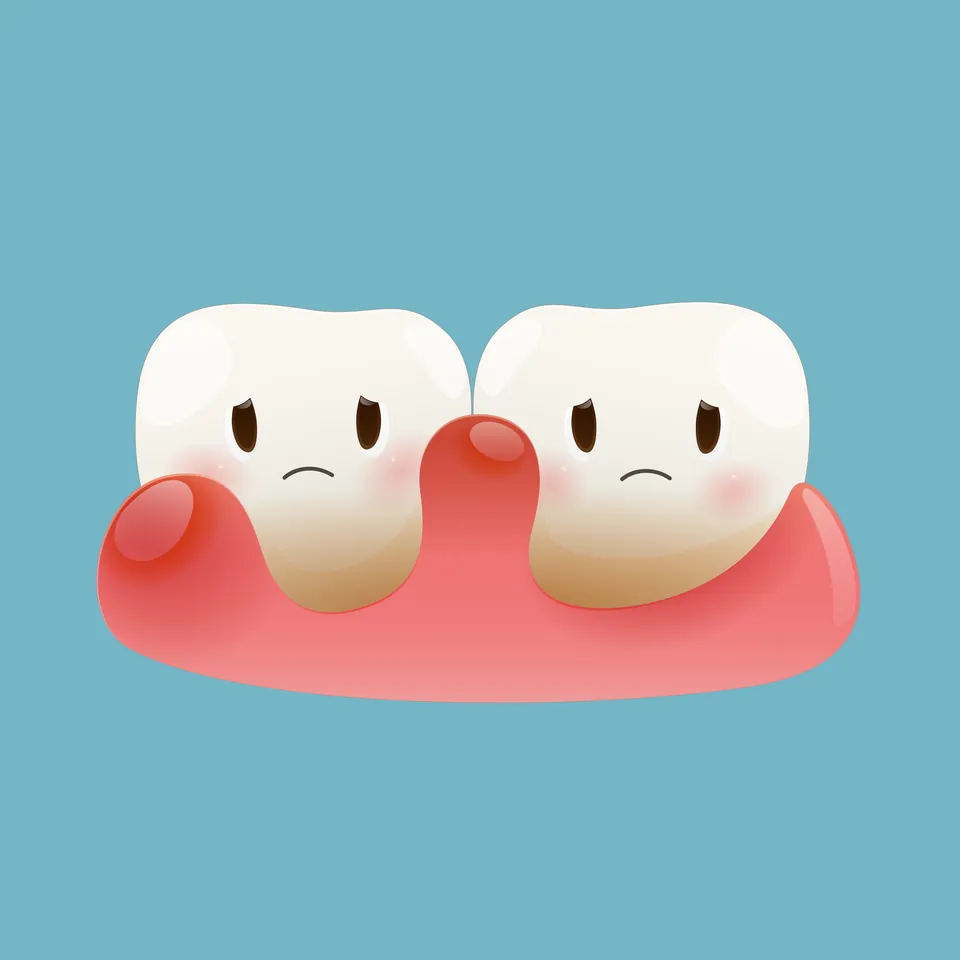
Gum disease starts when plaque sits along the gumline. In the early stage, called gingivitis, gums turn red, swell and bleed. This stage can usually be reversed with a cleaning and better home care. If it goes on, it can become periodontitis. The gums pull away from the teeth, forming pockets, and the bone that holds the teeth slowly breaks down.
Periodontitis often causes no pain, so many people do not know they have it. The main way to find it is to measure the pockets around each tooth and look at the bone on X-rays. Shallow pockets are healthy. Deeper pockets trap bacteria that a toothbrush and a routine cleaning cannot reach.
Gum care at our clinic is provided by our general dentists and dental team, not by a periodontist. When gum disease is advanced or needs surgery, your dentist can refer you to a periodontist and keep working with you on maintenance. Laser-assisted gum treatment may be added to deep cleaning in some cases, and your dentist will explain if it suits you.

Is it right for me?
- Your gums bleed when you brush or floss, most days.
- Your gums look red or puffy, or are pulling back from your teeth.
- You have bad breath or a bad taste that does not go away.
- A tooth feels loose, or your bite has changed.
- You have diabetes, smoke or have a family history of gum disease.
- You were told at a past visit that you have deeper gum pockets.
Step by step
- Gum assessmentYour gums are measured around each tooth and checked for bleeding, recession and loose teeth. X-rays show the bone level.
- Scaling and root planingWith freezing, tartar and bacteria are cleaned from below the gums and the root surfaces are smoothed so the gums can reattach. This is often done one section of the mouth at a time.
- Antibacterial therapyFor pockets that stay deep, your dentist may place an antibacterial medicine into the pocket or suggest a prescription rinse.
- Laser-assisted careWhere suitable, a dental laser may be used along with deep cleaning to treat the lining of the pocket. Your dentist will explain if this applies to you.
- Re-checkA few weeks later, the pockets are measured again to see how your gums have healed.
- Periodontal maintenanceGum disease is controlled, not cured. Cleanings every 3 to 4 months help keep pockets from getting deeper.

How it compares
| Question | Scaling and root planing | Periodontal maintenance | Gum surgery |
|---|---|---|---|
| Purpose | Treat active disease | Keep it controlled | Treat advanced pockets |
| Freezing | Usually | Sometimes | Yes |
| How often | Once, over 1 or more visits | Every 3 to 4 months | As needed |
| Who provides it | Our dentists and team | Our dentists and team | Usually a periodontist, by referral |
General information. Your dentist will explain what applies to you.
Benefits and risks
Benefits
- Helps stop gum disease from getting worse and protects the bone around your teeth.
- Gums often bleed less and feel firmer within a few weeks.
- Breath is often fresher once bacteria under the gums are reduced.
- Lowers the chance of losing teeth to gum disease.
- Regular maintenance catches flare-ups early.
Risks and limits
- Teeth can be sensitive to cold for a week or so after deep cleaning.
- As swelling goes down, gums may shrink back, making teeth look longer and spaces between them more visible.
- Gums may be tender and bleed for a few days.
- Results depend a lot on home care and not smoking. Pockets can deepen again if maintenance visits are missed.
- Some advanced cases do not respond enough and need surgery through a referral.
Cost and coverage
Gum treatment is planned in stages, and so is the cost. The first estimate usually covers scaling and root planing by section of the mouth, billed in time units under the Ontario Dental Association fee guide, plus any medicine placed in pockets. Maintenance visits every 3 to 4 months are a separate, ongoing cost. Many insurance plans cover periodontal care but limit scaling units per year, so we can check your plan first. CDCP lists periodontal treatment as a covered service, with approval needed for some care. We accept IFHP and direct bill all plans. You get a written estimate before each stage.
What shapes your estimate
- How many sections of your mouth need deep cleaning
- The number of scaling and root planing time units
- Whether antibacterial medicine is placed in pockets
- Whether laser-assisted treatment is used
- How often you need maintenance visits
- Your insurance limits on scaling units and maintenance visits
Read more about insurance and payment, the Canadian Dental Care Plan and IFHP coverage.
After your visit
- Expect some soreness for a day or two. A warm salt-water rinse can soothe the gums.
- Use a soft brush and keep cleaning gently, even where the gums are tender.
- Clean between your teeth daily with floss, small interdental brushes or a water flosser, as you are shown.
- If you smoke, cutting back or quitting helps your gums heal.
- Keep every maintenance appointment. It is the main thing that keeps gum disease under control.
Questions
Can gum disease be cured?
Gingivitis can usually be reversed. Periodontitis can be controlled but not cured, because lost bone does not grow back on its own. With treatment and regular maintenance, many people keep their teeth for years.
Is a deep cleaning the same as a regular cleaning?
No. A regular cleaning works above and just below the gumline. Scaling and root planing goes deeper into the pockets and smooths the roots, usually with freezing. It treats gum disease rather than preventing it.
Why do I need cleanings every 3 to 4 months?
Bacteria under the gums can build back up within a few months. More frequent visits clean the pockets before they cause more damage. Your dentist may change the timing as your gums get healthier.
Do you have a periodontist?
No. Gum care here is provided by our general dentists and dental team. If you need surgery or care beyond what we provide, your dentist can refer you to a periodontist.
Does gum disease affect the rest of my body?
Untreated gum disease has been linked with problems such as diabetes complications and heart disease. Researchers are still studying how these links work. Keeping your gums healthy is part of caring for your overall health.
Will laser treatment replace deep cleaning?
No. Where a laser is used, it is an extra step alongside scaling and root planing, not a replacement. Your dentist will tell you if it suits your gums.
Reviewed by the dentists at Aurora Gateway Dental Care. Last updated November 12, 2026. This page is general information, not personal medical advice.
Your dentists
Five dentists share the care at our clinic. Your dentist will explain your options at your exam.
Meet the team →Trusted health information
Related treatments
Patients visit from
Newmarket · Richmond Hill · Oak Ridges, Richmond Hill · East Gwillimbury · Holland Landing · Mount Albert · King City · Nobleton · Stouffville · Bradford
More about periodontics (gum care)
Ask us about periodontics (gum care)
(289) 475-5497Prefer to type? Send a request and we'll contact you to confirm a time.
676 Wellington Street East, Unit 3
Aurora, ON L4G 0K3