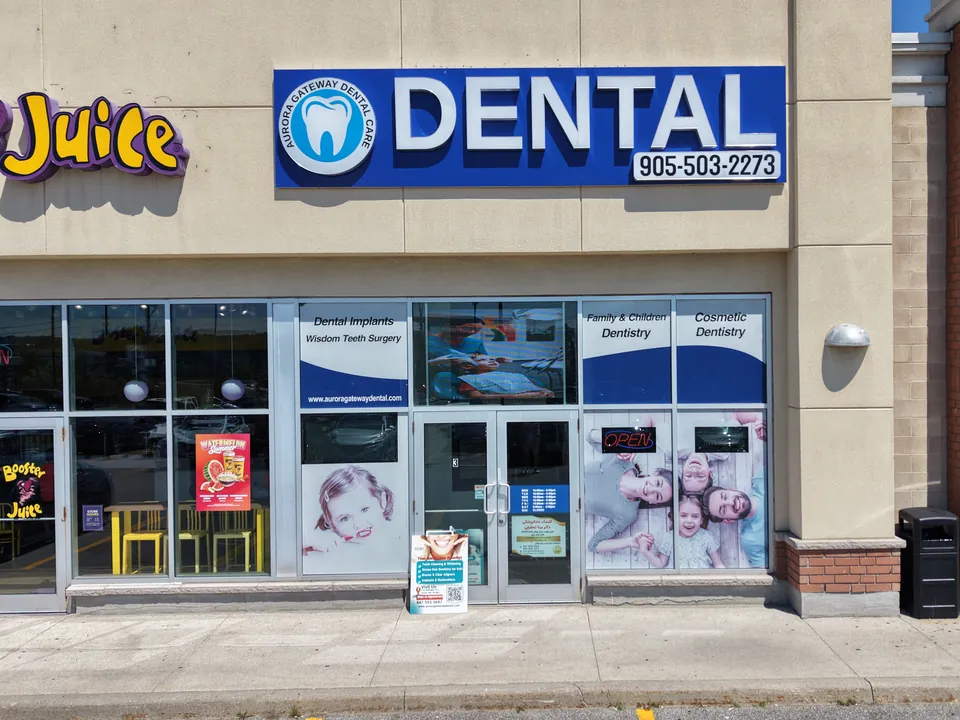
Restorative Dentistry in Aurora
Restorative dentistry repairs teeth that are decayed, cracked or worn, and replaces teeth that are missing. This page lays the options side by side, from a small filling to an implant.
The short answer
Restorative dentistry in Aurora at Aurora Gateway Dental repairs or replaces damaged and missing teeth. Options include fillings, crowns, bridges, dentures, implants and root canal treatment. Your dentist examines the tooth, takes X-rays if needed and explains which option fits, starting with the smallest repair that will do the job well.
- Visits
- 1 visit for most fillings; 2 or more for crowns, bridges, dentures and implants
- Timeline
- Depends on the treatment
- Comfort
- Local freezing for most repairs
- Coverage
- Fillings are often basic services; crowns, bridges and dentures are often major services
- Dentist
- Our dentists
At a glance
What it is
Teeth get damaged in different ways. Decay makes a hole. A large old filling cracks. A tooth breaks on a popcorn kernel. Or a tooth is lost. Restorative dentistry is the group of treatments that fix these problems so you can chew, speak and smile comfortably again.
Most repairs start small. A filling replaces the part of the tooth lost to decay. If too much tooth is gone for a filling to hold, a crown covers and protects what is left. If the nerve inside is infected, root canal treatment may save the tooth before it is rebuilt. When a tooth is missing, a bridge, a denture or an implant can fill the space.
Your dentist's aim is to keep as much natural tooth as possible. That is why the same cracked tooth might get a filling for one person and a crown for another. It depends on how big the damage is, where the tooth sits and how hard you bite. You will see your X-rays, and your dentist will explain why they suggest one option over another.
Fillings are the most common repair, so they are covered in detail here. Crowns and bridges, dentures, implants and root canals each have their own page with more on how they work.
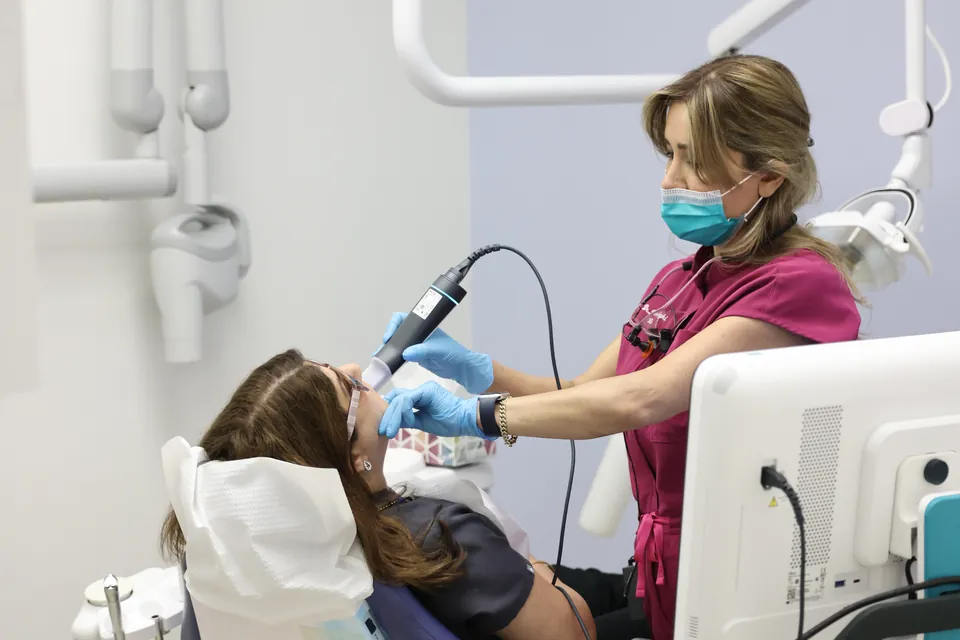
Is it right for me?
- A tooth is sensitive to sweets, cold or biting.
- You can feel a hole, rough edge or broken piece with your tongue.
- An old filling is dark, chipped or loose.
- Food keeps catching between two teeth in the same spot.
- You have a gap from a missing tooth and your bite feels different.
- Your dentist found decay on an X-ray, even though it does not hurt yet.
Step by step
- Exam and X-raysYour dentist checks the tooth and looks at X-rays to see how deep the damage goes.
- Options explainedYou hear what can be done, how long each option tends to last and what it involves. Then you decide.
- Written estimateBefore treatment, you get a written estimate. We can send it to your insurer first if you like.
- FreezingFor most fillings and crowns, the area is numbed with local anaesthetic. We check that it is fully numb before starting.
- RepairFor a filling, decay is removed and the space is filled with the material you and your dentist chose, then shaped and hardened. Larger repairs take more than one visit.
- Bite checkYour dentist checks your bite and smooths any high spots so the tooth feels natural when you chew.
How it compares
| Question | Filling | Crown | Bridge or implant |
|---|---|---|---|
| Fixes | Small to medium damage | Large damage or cracks | A missing tooth |
| Tooth removed | Only the decay | Outer layer reshaped | Bridge: neighbours shaped; implant: none |
| Visits | Usually 1 | Usually 2 | 2 or more |
| Surgery | No | No | Implant only |
General information. Your dentist will explain what applies to you.
Benefits and risks
Benefits
- Stops decay before it reaches the nerve.
- Restores comfortable chewing on both sides of your mouth.
- Tooth-coloured materials can blend with your natural teeth.
- Filling a gap helps keep nearby teeth from drifting.
- Starting with the smallest repair keeps more of your own tooth.
Risks and limits
- Teeth can feel sensitive to cold or biting for a few days to a few weeks after a filling.
- Any filling or crown can wear, chip or leak at the edges over time and may need replacing.
- A deep filling close to the nerve can sometimes lead to inflammation that needs root canal treatment later.
- Decay can return around a repair if plaque is left at the edges.
- Some people react to certain dental materials. Tell us about any allergies.
Cost and coverage
Restorative work ranges from a single filling to a full plan with several steps, so the cost is set tooth by tooth. After your exam, your dentist writes a treatment plan, and fees are based on the Ontario Dental Association fee guide. Insurance often treats fillings as basic services and crowns, bridges and dentures as major services, with different coverage levels. We direct bill all plans and accept CDCP and IFHP; CDCP covers fillings, root canals, crowns and dentures for eligible people, though some services need approval first. If you need several treatments, we can stage them in order of urgency. You get a written estimate before anything begins, and if you have no insurance, ask about our in-house dental plan and student program.
What shapes your estimate
- How many teeth need work and how many surfaces each filling covers
- The filling material chosen
- Whether a tooth needs a crown instead of a large filling
- Whether root canal treatment is needed first
- Lab costs for crowns, bridges, dentures and implant parts
- Your insurance coverage for basic and major services
Read more about insurance and payment, the Canadian Dental Care Plan and IFHP coverage.
After your visit
- Wait until the freezing wears off before chewing, so you do not bite your cheek or tongue.
- Ask your dentist when you can eat on a new filling. Many materials are fully set before you leave.
- If your bite feels high or uneven after a day or two, call us. A quick adjustment usually helps.
- Sensitivity that grows worse, or a throbbing ache, should be checked.
Questions
What kind of filling material is used?
Many fillings today are tooth-coloured composite. Glass ionomer and amalgam are other options for some teeth. Your dentist will explain which material suits your tooth and why before starting.
Should I replace my old silver fillings?
Not always. If an amalgam filling is intact with no decay around it, it can often stay. Your dentist will suggest replacing it if it is cracked, leaking or the tooth around it is breaking.
Why does my tooth need a crown instead of a filling?
A filling works when enough strong tooth is left around it. If a tooth has a very large filling, a crack or a root canal, a crown may protect it better. Our crowns and bridges page explains more.
Can a cavity heal on its own?
Very early weak spots in enamel can sometimes be reversed with fluoride and better home care. Once a true hole forms, it will not heal and usually grows. Your dentist may watch a tiny spot and fill a larger one.
How do I choose between a bridge, a denture and an implant?
It depends on how many teeth are missing, the health of nearby teeth and bone, your budget and how you feel about removable teeth. Your dentist will go through each one with you. Each has its own page if you want to read ahead.
Will I be awake for treatment?
Yes, most restorative work is done with local freezing while you are awake. If you feel anxious, tell us. We explain each step and can stop whenever you need.
Reviewed by the dentists at Aurora Gateway Dental Care. Last updated October 28, 2026. This page is general information, not personal medical advice.
Your dentists
Five dentists share the care at our clinic. Your dentist will explain your options at your exam.
Meet the team →Trusted health information
Related treatments
Patients visit from
Newmarket · Richmond Hill · Oak Ridges, Richmond Hill · East Gwillimbury · Holland Landing · Mount Albert · King City · Nobleton · Stouffville · Bradford
Ask us about restorative dentistry
(289) 475-5497Prefer to type? Send a request and we'll contact you to confirm a time.
676 Wellington Street East, Unit 3
Aurora, ON L4G 0K3