
Receding Gums: Causes and Treatment Options
By Aurora Gateway Dental Care · Published October 29, 2026 · Updated October 29, 2026 · Reviewed by our dentists
The short answer
Receding gums pull back from the teeth and expose part of the root. Common causes are gum disease, brushing too hard, thin gum tissue, grinding and tobacco. Gums don't grow back on their own, but recession can often be stopped. Treatment ranges from gentler brushing and deep cleaning to bonding or a gum graft.
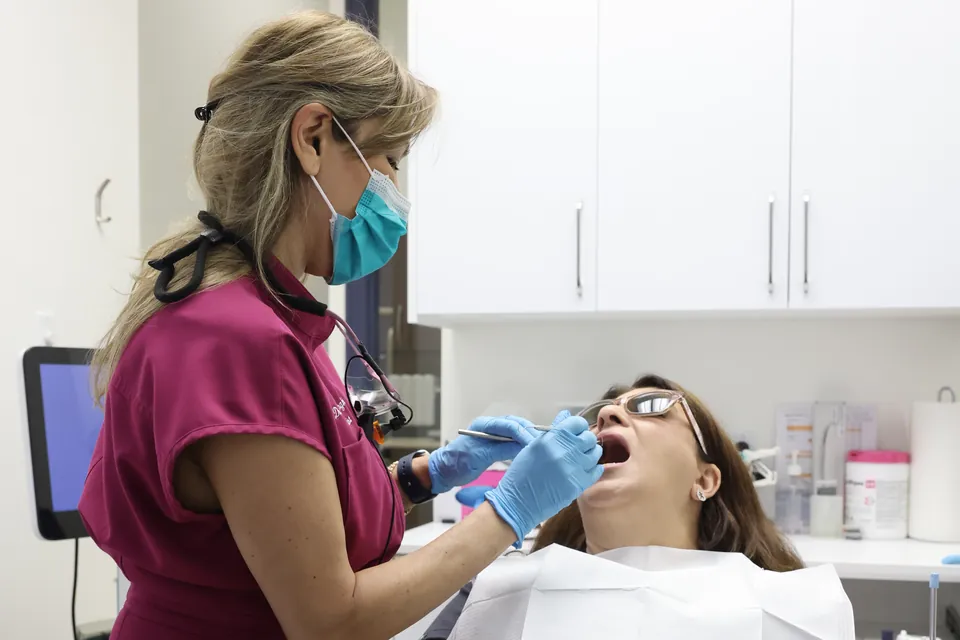
What receding gums are
Healthy gum fits snugly around each tooth like a collar and covers the root. With receding gums, that collar slowly moves down (or up, on the upper teeth), so more of the tooth shows. The newly exposed part is root surface, which is softer than enamel, slightly more yellow and often sensitive.
Gum recession usually happens so slowly that people don't notice it until a tooth looks longer, a dark triangle appears between teeth, or cold water starts to sting. It is very common in adults and becomes more common with age, but it isn't simply a normal part of getting older. There is usually a cause that can be addressed.
Why gum recession happens
- Gum disease, which breaks down the gum and bone that hold teeth in place
- Brushing too hard, or with a hard-bristled brush, especially in a sawing motion
- Naturally thin, delicate gum tissue, which tends to run in families
- A tooth that sits toward the outer edge of the jawbone, where the bone and gum covering it are thin
- A tight muscle attachment (frenum) that pulls on the gum
- Grinding or clenching
- Smoking or chewing tobacco
- Lip or tongue piercings that rub on the gum
- Past orthodontic movement in some cases, which your dentist can assess
Signs of receding gums
- Teeth that look longer than they used to
- A notch or ledge you can feel with a fingernail near the gumline
- Sensitivity to cold, sweets or brushing at the base of a tooth
- Darker or yellower areas near the gums
- New gaps or dark triangles between teeth
- In more advanced cases, loose teeth or a change in your bite
Can gums grow back?
Gum tissue that has receded does not grow back on its own, and no rinse, oil or toothpaste will regrow it. Products that claim to do so don't have solid evidence behind them.
The good news is that recession can often be stopped or slowed once the cause is managed. In some cases, lost gum can be rebuilt with a minor surgical procedure. The aim of care is to protect the root, keep the area healthy and comfortable, and stop things from getting worse.
Gum recession treatment options
Your dentist will measure the recession, check the gum pockets and bone level, and look for causes. Gum recession treatment then depends on how much has been lost and why. Options may include:
- Changing how you brush: a soft brush, gentle pressure and the right angle, plus a check of your technique at your visit
- Treating gum disease with a professional cleaning or a deep cleaning under the gums (scaling and root planing)
- Laser-assisted gum treatment as part of gum disease care, where your dentist feels it suits your case
- Desensitizing products or fluoride varnish for sensitive roots
- Tooth-coloured bonding to cover a notch or exposed root area
- A night guard if grinding is involved
- A gum graft, where tissue is taken from the roof of the mouth or another source and placed over the exposed root
About gum grafts and referrals
A gum graft is usually done with local anaesthetic. It can help cover the root, thicken thin gum and lower the risk of further recession. Healing takes a few weeks, and the area needs gentle care while it settles.
Some gum grafts and advanced gum cases are referred to a periodontist, a dentist who has completed specialty training in gum disease and gum surgery. If your case needs a specialist, we'll explain the referral and help coordinate it.
Protecting your gums from here
Brush twice a day with a soft brush and fluoride toothpaste, using small circles at the gumline instead of scrubbing. Clean between your teeth every day. If you smoke or vape, quitting helps your gums heal and slows further damage. Keep up regular checkups so your dentist can measure any changes over time.
If you're in Aurora or nearby and your teeth are starting to look longer, Aurora Gateway Dental Care can check your gums and talk you through options, with a written estimate before treatment. Call 289-475-5497 to book.
Questions
Is gum recession serious?
Mild recession that stays stable is often just watched. It becomes more serious if it keeps progressing, is linked to gum disease or makes teeth loose. Your dentist can track it with measurements at each checkup.
Can an electric toothbrush cause receding gums?
Used gently, an electric brush is fine and may even help, especially models with a pressure warning. Pressing too hard with any brush is the bigger problem. Let the brush do the work.
Do receding gums mean I'll lose my teeth?
Not necessarily. Many people have some recession and keep their teeth for life. The risk is higher when recession comes from untreated gum disease that is also destroying bone, so early care matters.
Can braces cause receding gums?
Most people finish braces or aligners with healthy gums. In some cases, moving a tooth toward thin bone can make recession more likely, especially where the gum was already thin. Your dentist checks the gums before and during treatment and will tell you if extra care is needed.
Are receding gums covered by dental insurance?
Many plans cover some gum treatments, but coverage varies a great deal. A predetermination from your insurer can tell you what your plan pays before you start. We direct bill to all insurance plans and also accept CDCP and IFHP.
General information, not personal medical advice. If you have pain, swelling or an injury, call us at 289-475-5497.