How Often Should You Get Your Teeth Cleaned?
By Aurora Gateway Dental Care · Published October 29, 2026 · Updated October 29, 2026 · Reviewed by our dentists
The short answer
How often dental cleaning is needed depends on your mouth. For many people, a checkup and cleaning every six months works well. People with gum disease, fast tartar build-up or certain health conditions may need visits more often, while some with very low risk can go longer. Your dentist sets the interval with you.
How often dental cleaning is needed
Many people grew up hearing that everyone needs a cleaning every six months. So how often dental cleaning is really needed? The honest answer is that it depends. For a lot of people, six months is a sensible schedule. The Canadian Dental Association says an exam every six months suits many people, but also that the right interval depends on you.
The Ontario Dental Association recommends seeing your dentist at least once a year, more often if your oral health, general health or lifestyle call for it. The American Dental Association puts it simply: there is no one-size-fits-all schedule.
What decides your schedule
Your dentist looks at several things when suggesting how often you should come in:
- How well you brush and clean between your teeth
- Whether you've had cavities or gum disease before
- How quickly tartar builds up on your teeth
- Your general health, including conditions such as diabetes
- Habits such as smoking
- Whether your mouth is often dry
- A family history of gum disease or tooth decay
Who may need cleanings more often
A shorter gap between visits is common for people who have been treated for gum disease. Bacteria can settle back into deep pockets, and regular maintenance cleanings help keep the gums stable. People who build tartar quickly, smokers, and people with diabetes may also benefit from more frequent visits.
Braces, bridges, implants and partial dentures add places for plaque to hide, so wearers may need extra help too. Some medicines cause a dry mouth, which raises the risk of decay. Pregnancy can also make gums more likely to bleed, so an extra visit may help during that time. Your dentist will explain the reason behind any shorter interval.
Who may be able to go longer
If your gums are healthy, you build little tartar and you haven't had cavities in years, your dentist may suggest a longer interval. Don't stretch it on your own, though. Gum disease and decay often cause no pain in the early stages, and the cleaning visit is also when your exam happens.
What happens at a cleaning visit
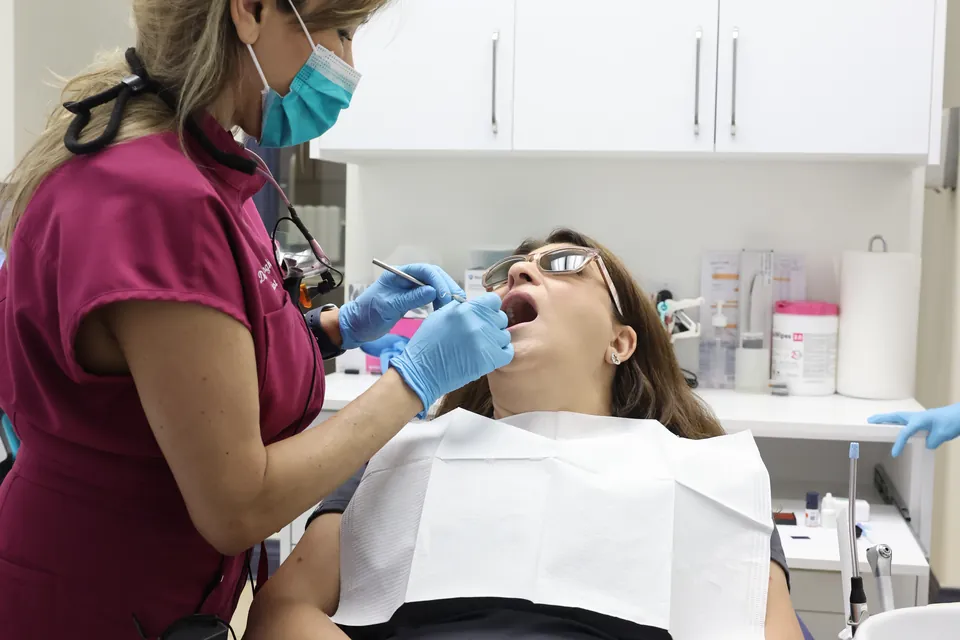
A cleaning is more than a polish. A hygienist or dentist removes plaque and tartar from above and just below the gumline, polishes the teeth to slow new build-up, and checks the gums for bleeding and pockets.
Your dentist then examines your teeth, gums and the rest of your mouth, including a check for signs of oral cancer, and decides whether X-rays are needed. You'll also get advice on daily care that fits your mouth, such as which brush or floss to use and where to focus. Bring up anything you've noticed since your last visit, like bleeding, sensitivity or a sore spot.
Don't let your plan set the schedule
Insurance plans often pay for cleanings on a fixed timetable and limit how much scaling is covered each year. That's a payment rule, not a health rule. The CDA advises against basing your dental care on what your plan covers. If you need more frequent care than your plan pays for, ask your dentist about a predetermination, or about spacing treatment in a way that works for you.
Children, seniors and people with dentures
Children benefit from regular visits from their first year, so problems in baby teeth are caught early. Seniors may need more frequent visits as medicines cause dry mouth or gums recede. The CDA notes that dentures, bridges and implants need regular checks too, to make sure they are clean, working well and fitting properly.
Booking cleanings in Aurora
If you're in Aurora or nearby, our hygienists and dentists will suggest a cleaning schedule based on your gums, your history and your health, and adjust it as things change. Evening hours on Tuesdays and Thursdays, and Saturday hours, can make regular visits easier to fit around work and school.
Questions
How often should you get your teeth cleaned if your mouth is healthy?
For many healthy adults, every six months to a year works well. The ODA recommends at least one visit a year. Ask your dentist what suits your mouth, since even healthy people differ in how fast they build tartar.
Why do I need cleanings every few months after gum treatment?
Bacteria can return to deep pockets fairly quickly after treatment. Shorter intervals help keep gum disease under control. Your dentist may lengthen the gap if your gums stay stable.
Can I skip cleanings if I brush and floss well?
Good home care makes a big difference, but it can't remove tartar once it has formed. Regular visits also include an exam that can catch problems you can't feel.
Do I need X-rays at every cleaning?
No. X-rays are taken based on your needs, not by default. Healthy adults without recent cavities usually need them less often than people with ongoing problems.
What if I've missed cleanings for a few years?
You're not alone, and there's no need to feel embarrassed. Your first visit back may take a little longer, or be split into two visits if there is a lot of tartar. Your dentist will check your gums and suggest a schedule from there.
General information, not personal medical advice. If you have pain, swelling or an injury, call us at 289-475-5497.