
Tartar on Teeth: Why It Forms and How It Is Removed
By Aurora Gateway Dental Care · Published October 29, 2026 · Updated October 29, 2026 · Reviewed by our dentists
The short answer
Tartar is plaque that has hardened on your teeth after soaking up minerals from saliva. Once it forms, brushing and flossing can't remove it. A dental hygienist or dentist removes it with hand scalers or an ultrasonic tool during a cleaning. Daily brushing and flossing clear away soft plaque before it has a chance to harden.
Plaque on teeth comes first
Tartar always starts as plaque. Every day, a soft, sticky film of bacteria builds up on your teeth, mostly where they meet the gums and in the spaces between them. The bacteria feed on sugars from food and give off by-products that irritate the gums.
Plaque on teeth is easy to remove while it's soft. A toothbrush and floss clear it away. The trouble starts when it's left in place for too long.
How tartar forms
Plaque that stays on a tooth slowly absorbs minerals from saliva and hardens. The Public Health Agency of Canada calls this hardened deposit tartar, or calculus. Its surface is rough, so fresh plaque sticks to it easily, and build-up grows layer by layer.
Above the gumline, tartar often looks yellow or tan. It can also form below the gumline, where it is harder to see without a dental exam. Some people build it faster than others, because saliva, diet and home care all play a part.
Where tartar tends to collect
Tartar shows up most where saliva pools or where a toothbrush tends to miss:
- Behind the lower front teeth, near the openings of the salivary glands
- On the cheek side of the upper back teeth
- Along the gumline all around the mouth
- Between crowded teeth that are hard to floss
- Around bridges, braces and partial dentures
Why tartar matters for your gums
The real problem with tartar is the bacteria it holds against your gums. Gums can turn red and puffy and bleed when you brush. That is gingivitis, the early stage of gum disease, and it can be reversed with good care.
If it continues, gums can pull away from the teeth and form pockets where tartar and bacteria settle deeper. This is periodontitis. The Public Health Agency of Canada explains that it breaks down gum and bone, can lead to loose teeth, and usually can't be reversed.
Tartar removal at the dental office
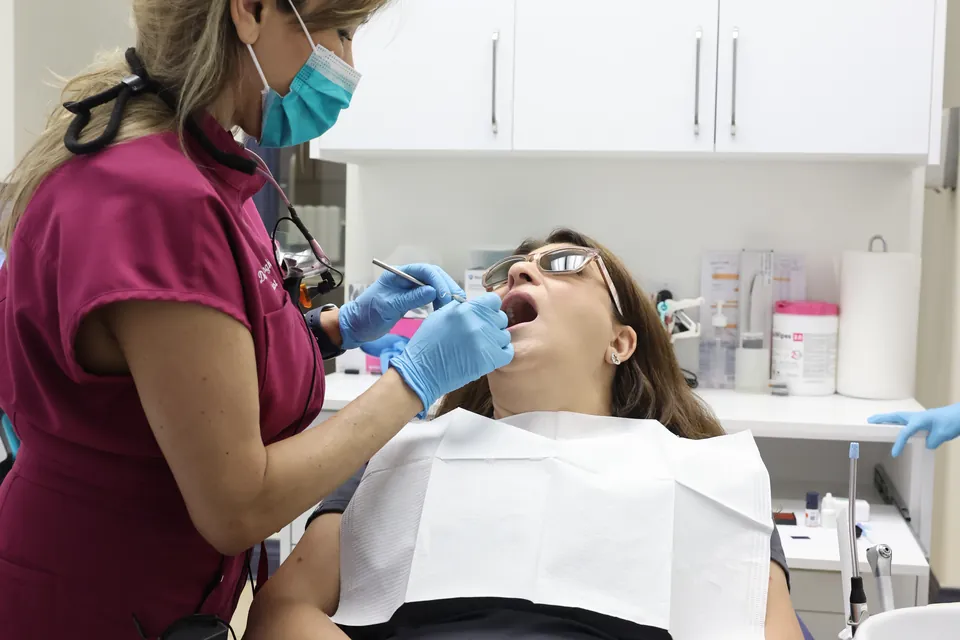
Professional tartar removal is a core part of a routine cleaning. A hygienist or dentist uses hand instruments called scalers, an ultrasonic scaler that vibrates deposits loose with a spray of water, or both. The teeth are then polished so plaque has a smoother surface to cling to.
When tartar has spread below the gums and pockets have formed, a deeper cleaning called scaling and root planing may be needed. The roots are cleaned and smoothed so the gums can heal against them. The American Dental Association notes this may take more than one visit and may need local anaesthetic.
Can you remove tartar at home?
It isn't a good idea. Scraping with metal picks can scratch enamel, cut the gums or push deposits further under the gumline, and you can't reach below the gums anyway. Home care is about prevention: clear soft plaque away before it hardens.
- Brush twice a day with fluoride toothpaste, angling the bristles toward the gumline.
- Floss, or use tiny interdental brushes, once a day.
- Pay extra attention to the backs of the lower front teeth.
- Limit sugary snacks and drinks between meals.
- Avoid tobacco, which is a risk factor for gum disease.
- Keep regular cleanings at the interval your dentist suggests.
Who needs to watch for build-up
Anyone can form tartar, but some people need to be more watchful. Braces, bridges and partial dentures create extra corners for plaque to hide. Smoking, diabetes, some medicines and hormone changes such as pregnancy raise the risk of gum disease, according to the Public Health Agency of Canada. A dry mouth also means less saliva to rinse plaque away.
If any of these apply to you, mention them at your next visit. Your dentist may suggest a shorter gap between cleanings or a different cleaning tool for home.
Signs it's time for a cleaning
You might feel rough patches with your tongue, see a yellow line along your gums, notice gums that bleed when you brush, or have bad breath that hangs on. These are all good reasons to book. Bleeding gums are a sign of inflammation, not a reason to brush less.
If you're in Aurora or nearby, our hygienists can remove tartar and help you find the spots your brush keeps missing. We'll suggest a cleaning schedule based on how quickly you build tartar and how healthy your gums are.
Questions
Is tartar the same as plaque?
No. Plaque is soft and can be brushed and flossed away. Tartar is plaque that has hardened, and it needs to be removed with professional instruments.
Do tartar-control toothpastes work?
They can help slow new tartar from forming above the gumline. They won't remove tartar that's already there, and they don't replace cleaning between your teeth.
Does tartar removal hurt?
Most people feel scraping and vibration rather than pain. Sensitive areas can be numbed, and you can ask for a break at any time. Gums may feel a little tender for a day afterward.
Why do I build up tartar so quickly?
Some people simply form it faster because of their saliva. Crowded teeth, braces or areas that are hard to reach add to it. Your dentist may suggest more frequent cleanings if you build up tartar quickly.
Can tartar cause bad breath?
It can contribute. Tartar holds bacteria against the teeth and gums, and those bacteria can produce odours. A cleaning, plus better daily care, often helps, though bad breath can have other causes too.
General information, not personal medical advice. If you have pain, swelling or an injury, call us at 289-475-5497.