
What Affects the Cost of Wisdom Teeth Removal?
By Aurora Gateway Dental Care · Published October 29, 2026 · Updated October 29, 2026 · Reviewed by our dentists
The short answer
Wisdom tooth removal cost depends on how each tooth is positioned, from fully grown in to trapped under gum or bone, how many teeth are removed, the X-rays needed to plan it, and whether you choose sedation. Your coverage matters too. After an exam and X-ray, your dentist can give you a written estimate.
Why wisdom teeth are often harder to remove
Wisdom teeth, or third molars, usually show up between about 17 and 21. They are the last teeth in line, far back in the mouth, and often there isn't enough room for them. A tooth that is stuck under the gum or jawbone, or tilted against the tooth in front, is called impacted.
Not every wisdom tooth needs to come out. One that is healthy, fully grown in and easy to clean may simply be watched at checkups. When removal is suggested, it is usually because of pain, infection, decay, a cyst or damage to the next tooth.
The position of each tooth sets the fee
Fee guides list wisdom tooth removal by how involved it is. From simplest to most involved, a tooth may be:
- Fully erupted, sitting above the gum like any other molar
- Covered by gum only, so the gum must be opened to reach it
- Partly covered by bone, so some bone may need to be removed
- Fully covered by bone, often needing the tooth to be divided into pieces to lift it out
Other details that change the wisdom tooth extraction cost
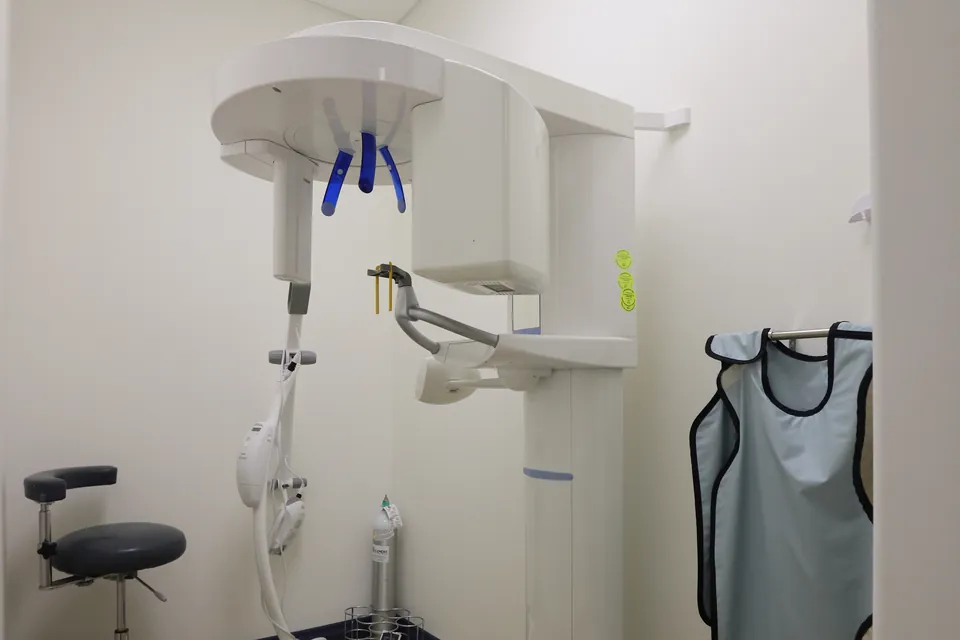
Beyond position, your dentist looks at the shape of the roots. Long, curved or joined roots can take more time. Roots that sit close to the nerve in the lower jaw need careful planning, because that nerve gives feeling to the lip and chin. A panoramic X-ray, and sometimes 3D imaging, helps show these details.
The number of teeth matters as well. Many people have all four removed in one visit to keep recovery to one stretch. Others remove only the ones causing trouble. If a case is complex, it may be referred to a surgical office, and we'll explain why.
Freezing, sedation and comfort
Most wisdom teeth can be removed with local anaesthetic, the same freezing used for fillings. Some people prefer sedation, especially if several teeth are coming out or they feel anxious. The NHS notes that sedation or general anaesthetic is mainly used for difficult teeth or nervous patients.
Sedation is a separate service with its own fee and its own coverage rules. Some plans cover it only in certain situations, and the Canadian Dental Care Plan requires preauthorization for some types. Ask what sedation would add before you decide.
After the appointment
Recovery usually means some swelling, a stiff jaw and soreness for several days. Your estimate may include a follow-up check. Occasionally a problem such as dry socket, where the blood clot is lost from the socket, needs extra visits for cleaning and a medicated dressing.
You can lower that risk by following your aftercare instructions, eating soft foods and avoiding smoking while you heal, since tobacco can delay healing.
Fees, insurance and government plans
Surgical fees are set by the dentist or surgical office doing the work, and the Ontario Dental Association suggested fee guide is a frequent reference. Insurers pay from their own tables. Many group plans cover extractions, including wisdom teeth, as basic or surgical services, often up to a yearly maximum. Removing four teeth in one visit can use a large part of that maximum, so a predetermination is worth asking for.
The Canadian Dental Care Plan includes oral surgery, and some surgical services require preauthorization. Your share depends on your family income, and CDCP fees may not match your dentist's fee. An infected wisdom tooth may count as urgent under the Interim Federal Health Program, while planned removal of a quiet tooth may not.
Waiting vs. acting now
If a wisdom tooth is causing no trouble, waiting and monitoring is often reasonable. But a partly erupted tooth that keeps getting infected, or one that is causing decay in the molar in front, can lead to more treatment later. Your dentist will weigh the risks with you rather than recommend removal by default.
Questions
Is it cheaper to remove only one wisdom tooth?
Fewer teeth usually means a lower total, but sedation and the visit itself are shared costs. If other wisdom teeth are likely to cause trouble soon, your dentist may discuss doing them together. The choice is yours.
Why do I need an X-ray before getting a price?
The X-ray shows how the tooth sits, the shape of the roots and how close it is to the nerve. Those details decide which service applies. Without it, any figure would be a guess.
Can wisdom teeth be removed in Aurora?
Yes. Aurora Gateway Dental Care offers simple and surgical extractions, including wisdom teeth. Complex cases may be referred, and we'll explain why. Sedation options are available for some treatments; we'll talk through what suits you.
What if my wisdom tooth is infected right now?
Call your dentist. An infection is often calmed first by cleaning under the gum flap, rinsing, and sometimes antibiotics, then removal is planned once things settle. If swelling affects your breathing or swallowing, call 911 or go to the emergency department.
Do I need to take time off work or school?
Many people rest for a day or two, especially after several teeth or sedation. Plan for a soft-food diet for a few days. We'll give you written aftercare instructions.
General information, not personal medical advice. If you have pain, swelling or an injury, call us at 289-475-5497.