
What Affects the Cost of a Root Canal?
By Aurora Gateway Dental Care · Published October 29, 2026 · Updated October 29, 2026 · Reviewed by our dentists
The short answer
Root canal cost depends mainly on which tooth is treated, since back teeth have more canals, and on how complex those canals are. A redo of an old root canal is more involved. Most back teeth also need a crown afterwards. Once the tooth has been examined and X-rayed, ask for a written estimate.
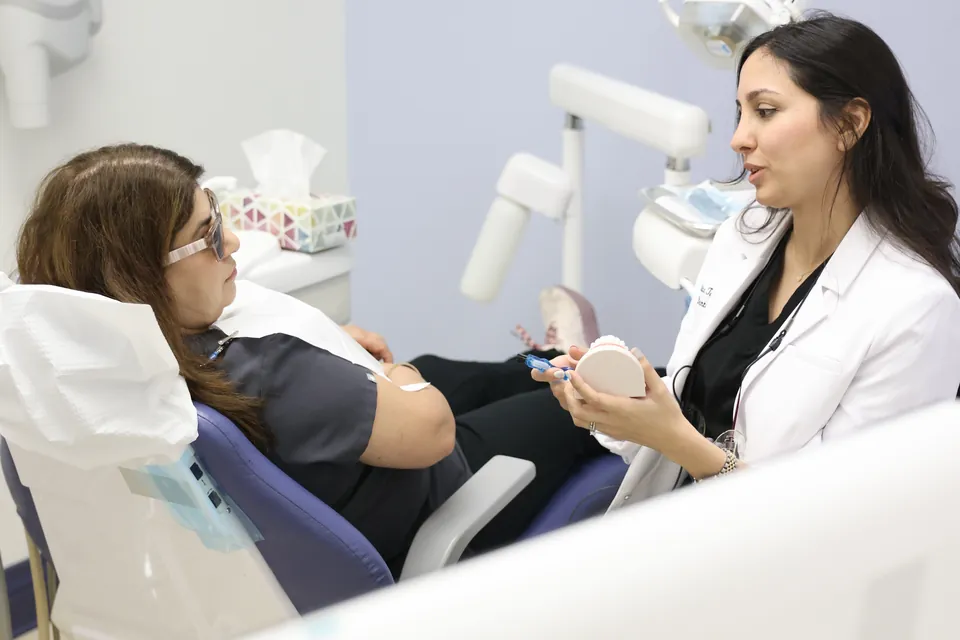
What happens during root canal treatment
Inside every tooth is soft tissue called the pulp. When deep decay, a crack or an injury lets bacteria reach it, the pulp can become inflamed or infected. Root canal treatment removes that tissue, cleans and shapes the narrow canals in the root, then fills and seals them.
The tooth is frozen first, and a thin rubber sheet keeps it dry. Treatment takes one or two appointments. The goal is to keep your own tooth instead of removing it.
Front tooth, premolar or molar
The type of tooth is the biggest single factor in a root canal price. A front tooth usually has one canal. Premolars often have one or two. Molars at the back commonly have three or more, and they are harder to reach.
More canals mean more time to find, clean and fill each one. That is why a molar root canal is listed with a different code and fee than a front tooth in the fee guides dentists use.
Why some canals are harder than others
Even two molars can differ. Your dentist looks at X-rays to see things that change the work involved:
- Canals that are very curved, narrow or partly blocked with hardened tissue
- An extra canal that is hard to locate
- A previous root canal that has failed and needs retreatment, which means removing the old filling material first
- A large infection at the root tip
- A crack that may affect whether the tooth can be saved at all
Emergency relief and referral
Many root canals start with pain. Sometimes the first visit focuses on relief: opening the tooth, removing the inflamed tissue and placing medicine inside. The rest of the treatment is finished at a later visit. Each step may be billed separately.
Some complex cases are referred to an endodontist, a dentist with extra university training in root canal treatment. Should your tooth need that level of care, we'll tell you why and help arrange it. A specialty office sets its own fees and will give you its own estimate.
The cost of root canal and crown together
A root canal treats the inside of the tooth, but the outside still needs to be rebuilt. The Canadian Dental Association notes that a back tooth will likely need a crown because chewing puts so much force on it. A front tooth may only need a filling.
If little tooth structure is left, a post and a core may go in first to hold the crown. So when you compare costs, ask for the full picture: the root canal, the build-up, the crown and its lab fee. Treating the tooth without protecting it can lead to a crack later.
Root canal cost, fees and coverage in Ontario
Ontario has no set price for root canals. Fees for endodontic work are decided by each office, and the Ontario Dental Association suggested fee guide is a common benchmark. What your plan pays back depends on its own schedule, so the plan's amount and the dentist's fee may not line up.
Many group plans cover root canal treatment as a basic service, while the crown afterwards often falls under major services at a different rate. A predetermination can show both before you start, though in an urgent case the pain-relief visit may happen first.
Root canal treatment is among the basic services in the Canadian Dental Care Plan. Standard treatment does not need preauthorization, but retreatment does. The tooth must be restorable, and CDCP fees may not match the dentist's fee, so ask about any amount you would pay. For people with Interim Federal Health Program coverage, care for an infected, painful tooth may count as urgent; we can check what applies.
Root canal or extraction?
Removing the tooth can look like the lower-cost choice on the day. But a missing tooth often leads to a bridge, implant or partial denture later, and neighbouring teeth can shift into the gap. The CDA notes that saving the tooth avoids an artificial replacement.
Sometimes extraction is the right call, for example if the tooth is split or has too little structure left. Your dentist will explain the options and what each is likely to cost over time.
Questions
Is a root canal painful?
The tooth is frozen, so most people feel pressure rather than pain. Mild tenderness for a week or two afterwards is common. Severe pain or swelling afterwards is not normal, so call us if it happens.
What if I can't afford the crown right away?
Talk to us. Your dentist may place a strong filling or temporary crown to protect the tooth for a short time. Waiting too long raises the risk of a crack, so we'll explain how long is reasonable.
Do I pay again if the root canal needs redoing?
Retreatment is a separate service with its own fee. It is more involved because the old filling material must be removed first. Your dentist will discuss whether retreatment, surgery or extraction makes the most sense.
Can I get a root canal estimate in Aurora?
Yes. Yes. Root canal treatment is one of the services at Aurora Gateway Dental Care. After the X-ray, we put the root canal and the restoration that follows into a written estimate. Claims go straight to your insurer, CDCP and IFHP are accepted, and if nerves are a concern, sedation options are available for some treatments.
General information, not personal medical advice. If you have pain, swelling or an injury, call us at 289-475-5497.