
What Affects the Cost of a Dental Crown?
By Aurora Gateway Dental Care · Published October 29, 2026 · Updated October 29, 2026 · Reviewed by our dentists
The short answer
Tooth crown cost depends on the material, where the tooth is in your mouth, how much of the tooth is left, and whether it needs a root canal, post or build-up first. Lab fees and your coverage also matter. Ontario dentists set their own fees, so ask for a written estimate after an exam.
Why a crown is recommended
A crown, sometimes called a cap, covers the whole visible part of a tooth. It is used when a tooth is damaged but can still be kept. Common reasons include a large filling that is cracking, a broken tooth, a tooth that has had root canal treatment, or a tooth that is badly worn or misshapen.
The reason for the crown matters for cost. A tooth that simply needs covering is a simpler job than one that is broken near the gum or has very little structure left.
Material choice and where the tooth sits
Crowns come in several materials. Your dentist will match the material to the tooth, your bite and any grinding habit, and explain why. The choice changes both the lab work and the final fee, so it is worth asking about the options before the tooth is prepared.
Each material has trade-offs:
- Metal, such as gold, is very durable and kind to opposing teeth, but it shows. It is usually used on back teeth.
- All-porcelain or ceramic crowns look the most like natural teeth and suit front teeth, but some types can chip.
- Porcelain fused to metal combines strength with a tooth-coloured surface, though a dark line can show near the gum in some cases.
- Zirconia is a strong ceramic that is now widely used for both front and back teeth.
What may be needed before the crown
This is where two crowns on paper can turn out very different. Before a crown goes on, the tooth must be solid underneath. Depending on what the exam and X-rays show, you may need:
- A core or build-up to replace missing tooth structure so the crown has something to hold
- Root canal treatment if the nerve is inflamed or infected
- A post inside the root when very little tooth is left above the gum
- Gum treatment so the edge of the crown sits on healthy tissue
- Treatment of any decay on nearby teeth
Visits, the temporary crown and lab work
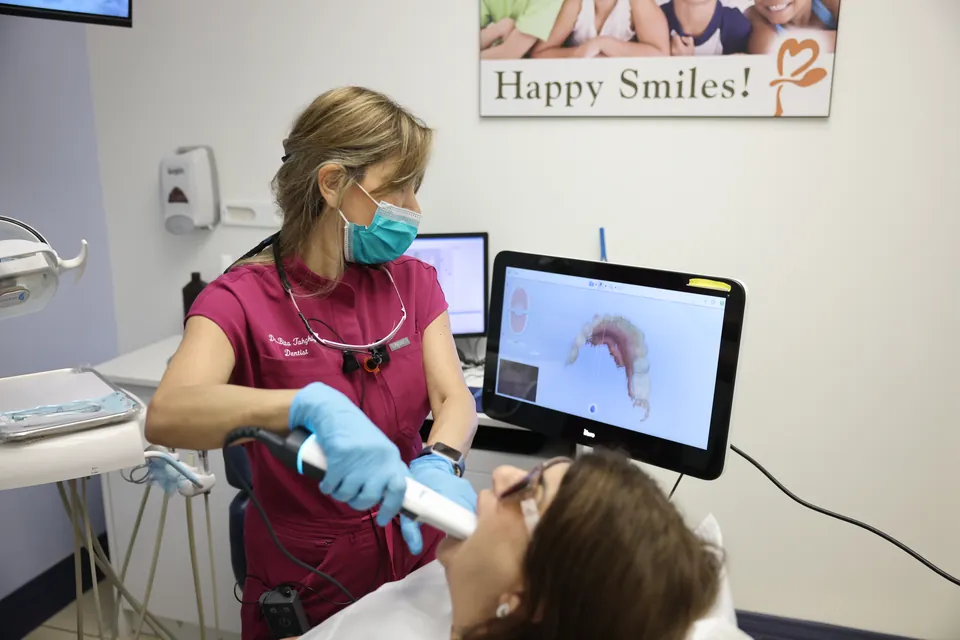
Many crowns take two visits. At the first, the tooth is numbed and shaped, and a mould or digital scan is taken. A temporary crown protects the tooth while the final one is made. At the second, your dentist checks the fit, colour and bite before cementing the final crown.
Most crowns are made by a dental laboratory. The Ontario Dental Association explains that lab charges are extra costs on top of the dentist's own fee and are shown as a separate line on claims. For a front tooth, extra time may go into matching the shade to the teeth beside it.
How dental crown cost is set in Ontario
A crown fee is set by the individual dentist, who weighs chair time, materials, equipment, staff and the lab bill. Plenty of Ontario offices check their fees against the Ontario Dental Association suggested fee guide, but a crown can be priced higher or lower than the guide.
Your insurer, meanwhile, works from a fee schedule of its own. Many group plans treat crowns as a major service, which often means a lower share paid by the plan and a yearly maximum that can run out quickly. Some plans also limit how often a crown on the same tooth is covered. Ask us to send a predetermination so your insurer can tell you in writing what it expects to pay. It is not a guarantee, but it shows your likely share.
CDCP and IFHP coverage for crowns
The Canadian Dental Care Plan covers crowns for adults 18 and older, but only with preauthorization. CDCP also requires active decay and gum disease to be treated first, and it does not cover crowns done to improve appearance. Your co-payment, if any, depends on your family income. Because CDCP fees may differ from a dentist's fees, ask about any amount not covered before you agree to treatment.
A crown is planned care, while the Interim Federal Health Program centres on urgent needs. If you have IFHP, we can check whether any part of your treatment qualifies.
Alternatives to a crown
A crown isn't always the only option. A smaller break may be fixed with a filling or bonding. An onlay covers part of the chewing surface and keeps more of the tooth. If a tooth can't be restored, removing it and replacing it with a bridge, implant or partial denture may be discussed.
Waiting has a cost too. A cracked tooth can split further and may then need a root canal, or may no longer be saveable. Your dentist can explain what is likely to happen if you hold off.
Questions
How long does a crown last?
With good care, a crown can last 10 years or longer, according to the Canadian Dental Association. Brushing, flossing, regular checkups and not chewing ice or pens all help. Grinding your teeth can shorten its life, so a night guard may be suggested.
Is a tooth cap cost the same as a crown?
Yes. Cap is an everyday word for a crown. The same factors apply: the material, the tooth, the prep work and the lab.
Why does my estimate list several codes for one crown?
Each service has its own code. The crown, a build-up, a post and the lab charge may all be listed separately. This helps your insurer see exactly what is being done.
Can I get a crown in Aurora with direct billing?
Yes. Yes. Aurora Gateway Dental Care sends claims directly to all insurance plans and accepts CDCP and IFHP. Before the tooth is prepared, you'll receive a written estimate for the crown, any build-up and the lab work, along with your payment choices.
General information, not personal medical advice. If you have pain, swelling or an injury, call us at 289-475-5497.