
What Affects the Cost of Veneers?
By Aurora Gateway Dental Care · Published October 29, 2026 · Updated October 29, 2026 · Reviewed by our dentists
The short answer
Porcelain veneers cost depends on how many teeth are treated, the material, the planning and lab work involved, and any care needed first, such as whitening, gum treatment or fixing a bite problem. Because veneers are usually cosmetic, most plans don't cover them. Ask for a written estimate after a cosmetic consultation and exam.
What veneers are and what they change
A veneer is a thin shell bonded to the front of a tooth. It can change the colour, shape or length of a tooth, cover chips and stains, and close small gaps or make slightly crooked teeth look straighter.
Veneers are made from porcelain or composite resin. The choice between them is one of the biggest factors in the veneers price, but it is not only about cost. Each material behaves differently over the years.
Porcelain veneers cost vs. composite veneers cost
Porcelain veneers are made in a dental lab from a mould or scan of your teeth. The Canadian Dental Association notes they usually need at least two visits. A thin layer of enamel is removed, temporary veneers are placed, and the final shells are bonded at a later visit. Porcelain tends to resist staining and last longer than resin.
Composite veneers are built up directly on the tooth in layers, often in one visit, much like bonding. There's no lab fee, and repairs are usually simpler. On the other hand, resin can stain and wear sooner, so it may need polishing, touch-ups or replacement earlier.
How many teeth, and why it's rarely just one
Matching a single veneer to the natural teeth beside it can be one of the harder jobs in dentistry, because the shade and translucency need to blend. Many people choose to treat several upper front teeth together so the smile looks even. More teeth mean more lab work and more chair time.
Your dentist will talk about which teeth show when you smile and speak. That helps you decide where veneers make a visible difference and where they don't.
Some people decide that veneers on the teeth that show most, combined with whitening for the rest, gives the look they want. Others find bonding on one or two teeth is enough.
Planning steps that shape the estimate
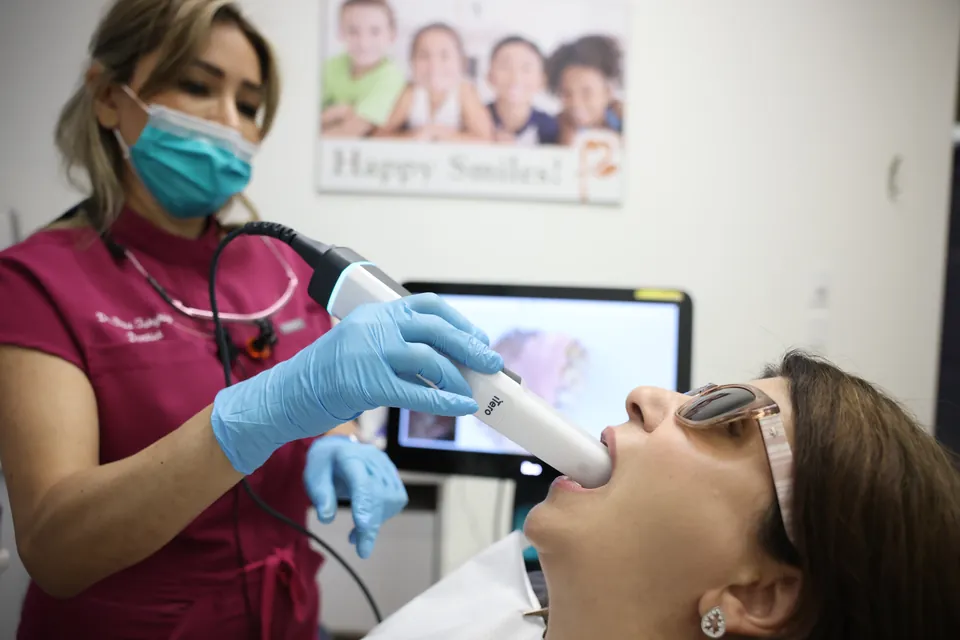
Good veneer work starts with planning. This often includes photos, a digital scan, and sometimes a mock-up so you can preview the new shape before any enamel is removed. Then the details are passed to the lab.
Other care may come first:
- Whitening, so the veneers can be matched to a brighter shade of your other teeth
- Treating decay or gum inflammation, since veneers need healthy teeth and gums
- Orthodontic treatment, if moving teeth would allow less enamel removal
- A night guard if you grind or clench, which can crack porcelain
A long-term commitment
Because porcelain veneers need enamel removed, the CDA notes the change can't be reversed. The tooth will always need some kind of covering. Veneers don't last forever, so over a lifetime you may replace them at least once. That future cost belongs in your decision.
Not everyone is a good candidate. Teeth with large fillings or little enamel may be better suited to a crown. Heavy grinding is another reason your dentist may suggest a different approach.
Fees and coverage for veneers
Cosmetic fees are set by each dentist, who may compare them with the Ontario Dental Association suggested fee guide. With porcelain, the lab's charge is added on top of the dentist's own fee.
The CDA notes that veneers are often considered cosmetic and may not be covered by dental plans. Some plans may pay toward a tooth that is broken or worn, sometimes at the rate for a less costly treatment. A predetermination clears this up before you commit. Under the Canadian Dental Care Plan, veneers in composite or ceramic are excluded. Cosmetic work also falls outside the urgent care covered by the Interim Federal Health Program.
Other ways to change your smile
Veneers are one option among several. Whitening can lift natural stains. Bonding can fix small chips and gaps with no enamel removal. Clear aligners or braces can straighten teeth rather than cover them. A crown may suit a tooth that is weak or heavily filled. Your dentist will explain the trade-offs so you can choose with confidence.
Talking about veneers in Aurora
Thinking about veneers and live around Aurora? Start with an exam at Aurora Gateway Dental Care. Dr. Bita Tahghighi has advanced training in cosmetic and aesthetic dentistry and can walk you through the options. No enamel is touched until you have a written estimate and understand your payment options.
Questions
Are composite veneers a good way to try the look first?
They can be, since composite usually needs little or no enamel removal. Some people start with composite and move to porcelain later. Ask your dentist whether your teeth suit this approach.
Can veneers be whitened later?
No. Whitening gel doesn't change porcelain or resin. If you want a brighter smile, whiten first, then match the veneers to that shade.
What happens if a veneer chips?
A small chip in composite can often be patched. A chipped porcelain veneer may need replacing. Avoid biting ice, nails or pens, and wear a night guard if one is recommended.
Why do veneer estimates vary so much between offices?
Offices set their own fees, use different labs and include different planning steps. Compare what is included, such as mock-ups, temporaries and follow-up, rather than the total alone.
Do veneers need special care?
Brush twice a day, floss daily and keep up your cleanings, since the tooth underneath can still decay at the edges. Avoid using your front teeth to bite hard objects. Your hygienist will use polishing methods that are gentle on porcelain and resin.
General information, not personal medical advice. If you have pain, swelling or an injury, call us at 289-475-5497.