Throbbing Tooth Pain or Pain When Chewing: What It Can Mean
By Aurora Gateway Dental Care · Published October 29, 2026 · Updated October 29, 2026 · Reviewed by our dentists
The short answer
Throbbing tooth pain usually means the nerve inside the tooth is inflamed, often from deep decay, a crack or an infection. Pain only when chewing can point to a cracked tooth, a high filling or a problem at the root tip. Any throbbing that lasts more than a day or two, or wakes you at night, needs a dentist.
What makes a tooth throb
Inside every tooth is the pulp, a small core of nerves and blood vessels. It sits inside hard walls that can't stretch. When the pulp is irritated or infected, it swells, and pressure builds up in that tight space. That pressure is what you feel as throbbing tooth pain, often in time with your heartbeat.
The pulp can recover if the cause is caught early. If the irritation is too strong or goes on too long, the nerve can die and infection can spread to the bone around the root. Knowing the pattern of your pain helps your dentist work out where things stand.
Reading the pattern of throbbing tooth pain
No home check can diagnose a tooth, but these patterns are what dentists ask about.
- A short, sharp zing with cold that stops within seconds often means an irritated but healthy nerve, such as from a cavity or exposed root.
- Pain with hot or cold that lingers for a minute or more, or throbbing that starts on its own, suggests the nerve is more seriously inflamed.
- Throbbing that is worse when you lie down or that wakes you up is a common sign of deeper trouble.
- A dull ache with tenderness when you tap or bite on the tooth can mean infection at the root tip.
- Pain that suddenly stops after days of throbbing does not always mean it is better. The nerve may have died, and infection can still be present.
Why teeth hurt when chewing
When teeth hurt when chewing, the problem may be in the tooth itself or in the ligament that holds it in the jaw. A few causes come up often:
- A cracked tooth: sharp pain when you bite on something, or when you release the bite, sometimes with a twinge from cold. Cracks can be too small to see.
- A new filling that sits a little high: soreness on biting in the days after the appointment. A quick adjustment usually fixes it.
- Decay under an old filling or crown: pain on pressure, food catching, or a rough edge.
- An abscess or root infection: the tooth may feel tall, tender to touch, or slightly loose.
- Grinding or clenching: several teeth, often on both sides, feel sore in the morning, sometimes with jaw tiredness.
- Food packed between teeth: pressure and soreness between two teeth that eases after flossing.
Molar tooth pain
The back teeth do most of the chewing and have deep grooves and wide contact points, so they are common places for decay and cracks. Large old fillings in molars can also weaken the tooth walls over time.
Pain in an upper molar can sometimes come from the sinus above it, especially during a cold. Our article on sinus tooth pain explains how to tell the difference. Pain far at the back in a younger adult can be a wisdom tooth. Pain in a lower molar can spread to the ear or jaw, which can make it hard to tell exactly which tooth is the source. Dental X-rays and simple tests help pinpoint it.
What you can do until you see a dentist
These steps can make you more comfortable, but they don't treat the cause.
- Chew on the other side and choose soft food that is neither very hot nor very cold.
- Hold a cold pack wrapped in a cloth against your cheek. Avoid heat on the face, which can make an infection worse.
- Floss gently on both sides of the tooth in case food is trapped.
- Use an over-the-counter pain reliever only as directed on the package. Ask a pharmacist which one is safe with your other medicines and health conditions. Don't give ASA (aspirin) to children or teens.
- Never put a tablet on the gum or tooth. Don't take antibiotics left over from another illness or prescribed for someone else.
How a dentist finds and treats the cause
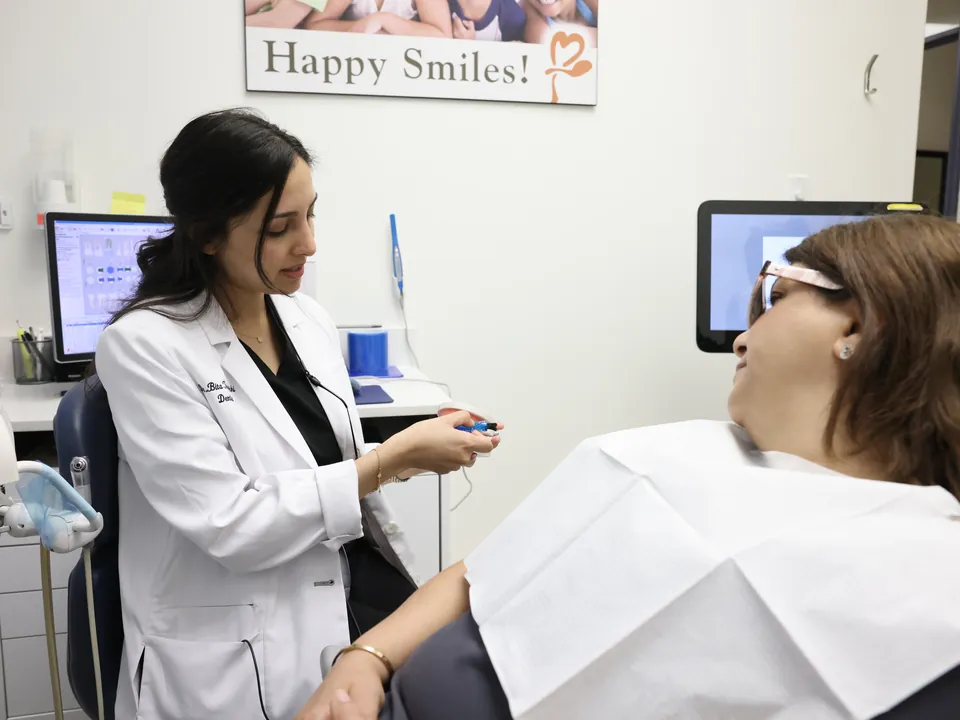
Your dentist will ask about your pain, look at the tooth, and may tap on it, test it with cold, check your bite and take an X-ray. An intraoral camera can show a crack or worn filling on a screen so you can see it too.
Treatment depends on what is found. A cavity may need a filling. A high filling can be smoothed in minutes. A cracked tooth often needs a crown to hold it together. If the nerve is badly inflamed or infected, root canal treatment can save the tooth by removing the damaged pulp. If a tooth can't be saved, it may need to be removed. Antibiotics are sometimes prescribed when infection is spreading, but they don't fix the tooth on their own. Your dentist will explain the choices and give you a written estimate first.
When to call 911 or go to the emergency department
Tooth pain with any of the following needs urgent medical care right away. Don't drive yourself.
- Swelling that makes it hard to breathe, swallow or speak
- Swelling spreading to the eye, the neck or under the jaw
- Fever with a swollen face and feeling very unwell
Getting help in Aurora
If you're in Aurora or nearby and a tooth is throbbing or hurting when you chew, call Aurora Gateway Dental Care at 289-475-5497. If we're closed, follow the instructions on our line. Tell us how long it has hurt and what makes it worse, so we can guide you on how soon you should be seen.
Questions
Why is my tooth pain worse at night?
Lying down increases blood flow to the head, which can raise pressure inside an inflamed tooth. You also notice pain more when there is nothing to distract you. Pain that keeps waking you is a sign to see a dentist soon.
Can throbbing tooth pain go away on its own?
Mild irritation sometimes settles. Strong throbbing usually means the nerve is badly inflamed or infected, and pain fading on its own may mean the nerve has died. The infection can stay and spread, so a dental exam is still needed.
My new filling hurts when I bite. Is that normal?
Some sensitivity for a few days after a filling is common. Pain every time you bite down often means the filling is slightly high. Call your dentist, as a small adjustment usually helps.
Do I need antibiotics for a toothache?
Most toothaches are not treated with antibiotics. They are used when infection is spreading or you have a fever or swelling, and only with a prescription. The tooth still needs dental treatment to remove the source.
General information, not personal medical advice. If you have pain, swelling or an injury, call us at 289-475-5497.