Sedation Dentistry in Aurora
For some people and some treatments, calm words and breaks are not quite enough. Sedation can help you feel more relaxed, and we will talk through whether it suits you.
The short answer
Sleep dentistry is a common name for sedation dentistry, where medicine helps you feel calm and relaxed during treatment. Many forms leave you drowsy but able to respond rather than fully asleep. At Aurora Gateway Dental in Aurora, sedation options are available for some treatments; we'll talk through what suits you after reviewing your health and needs.
- Visits
- A planning visit first, then your treatment visit
- Timeline
- Allow extra time to settle before and recover after
- Comfort
- Local freezing is still used for the treatment itself
- Coverage
- Varies by plan; CDCP lists sedation, with approval needed for deeper levels
- Dentist
- Our dentists
At a glance
What it is
The phrase sleep dentistry makes many people picture being fully asleep. In practice, dental sedation covers a range. At the lighter end, you are awake, calm and able to talk, though you may not remember much afterwards. In the middle, you are very drowsy but can still respond when spoken to. Deeper sedation and general anaesthesia, where you are unaware of the treatment, are used for a much smaller group of patients and procedures, often in a hospital or a setting set up for them.
Sedation can be given in different ways, for example as a pill, a gas you breathe through a small nose mask, or medicine through a vein. The American Dental Association notes that the choice depends on the procedure, your overall health, allergies and how anxious you feel. You may hear the phrase oral sedation dentistry, which simply means the calming medicine is taken by mouth. This page describes these categories as general background. Sedation options are available for some treatments at our clinic, and we'll talk through what suits you rather than offer a one-size plan.
In Ontario, sedation in dental offices is regulated by the Royal College of Dental Surgeons of Ontario. Dentists need authorization from the College to provide sedation, and offices where it is given need a facility permit and are inspected. If you are comparing dental offices, it is reasonable to ask about this.
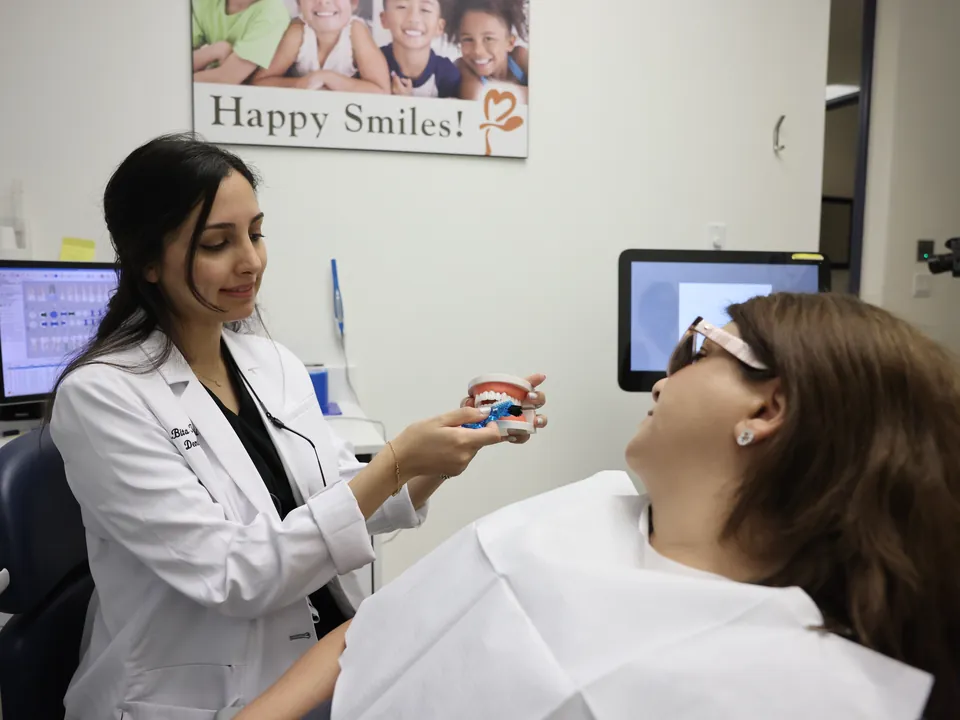
Sedation is a tool, not a cure for dental worry. It works well alongside the things that help nervous patients every day: clear explanations, a stop signal and treatment split into manageable steps. People often ask about sedation for wisdom teeth removal, other oral surgery, longer appointments or a strong gag reflex. Our nervous patients page covers the many ways we help without medicine.
Is it right for me?
- Dental anxiety has kept you from getting care you need.
- You are having wisdom teeth or other teeth removed.
- You need a long appointment and find it hard to stay still.
- You have a strong gag reflex that makes treatment difficult.
- Local freezing alone has not been enough to keep you comfortable in the past.
Step by step
- Talk it throughTell us what worries you and which treatment you need. We explain whether sedation could help and what other options exist.
- Health reviewYour dentist goes over your medical history, medicines, allergies, sleep apnea, pregnancy and past reactions to sedation or anaesthesia.
- Written instructionsYou receive clear instructions on eating, drinking and your usual medicines, and on whether you need a responsible adult to take you home.
- Treatment dayWe check your health on arrival, give the sedation, monitor you throughout and still use local freezing for the treatment.
- Recovery and going homeYou rest until you are steady, then go home with written aftercare, and with your companion if your sedation calls for one.
Benefits and risks
Benefits
- Can make it possible to get care you have been putting off.
- Helps you stay relaxed and still during longer treatment.
- Can ease a strong gag reflex.
- May allow more treatment to be done in one visit where that is safe and sensible.
Risks and limits
- You may feel drowsy, unsteady or forgetful for the rest of the day.
- Some people feel sick to the stomach or have a headache afterwards.
- Sedatives can slow breathing, which is why health screening and monitoring matter.
- Sedation is not suitable for everyone, for example with some medical conditions or medicines.
- You may not be able to drive, work or make important decisions until it fully wears off.
Cost and coverage
Sedation is billed separately from the dental treatment it supports, and the fee depends on the treatment, how long you need it and the monitoring involved. We use the Ontario Dental Association fee guide as our reference. Many insurance plans cover sedation only for certain procedures, so we can send a predetermination and bill all plans directly. The Canadian Dental Care Plan lists anaesthesia and sedation among its covered services, with preauthorization needed for deep sedation or general anaesthesia; IFHP rules vary. Ask about our in-house dental plan and student program. Your written estimate shows the treatment and sedation fees before you decide.
What shapes your estimate
- Whether sedation is suitable for you
- The treatment being done and how long it takes
- Pre-visit health review and any medical clearance
- Monitoring and recovery time
- Your plan's rules for sedation coverage
Read more about insurance and payment, the Canadian Dental Care Plan and IFHP coverage.
After your visit
- If your dentist says you need a companion, have a responsible adult take you home and stay with you for the rest of the day.
- Until the sedation has fully worn off, do not drive, use machines, drink alcohol or sign important papers; your dentist will tell you how long that is.
- Start with fluids and soft food once you feel ready.
- Call us if you feel very unwell; call 911 for trouble breathing.
Questions
Will I be asleep?
Most dental sedation keeps you awake but deeply relaxed. You may drift off and remember little afterwards. Being fully unconscious is general anaesthesia, which is a different service used for specific cases.
Which type of sedation do you offer?
Sedation options are available for some treatments, and we'll talk through what suits you. The right choice depends on your health, your medicines and the treatment you need, so we decide together after a health review.
Do I still get freezing?
Yes. Sedation helps you relax, but local freezing is what numbs the area being treated. You may notice the injection less while sedated.
Can I drive myself home?
Often not. Many sedatives affect your judgement and reaction time for hours, so you would need an adult to take you home and stay with you. Your dentist will tell you exactly what applies to the sedation planned for you.
Is sedation safe?
Sedation is widely used in dentistry, and careful health screening and monitoring lower the risks, but it always carries some risk. In Ontario, dentists need authorization from the RCDSO to provide it. Tell us about every medicine and health condition, including sleep apnea.
Can I have sedation for a cleaning?
It depends on how anxious you are and your health. For many people, gentle pacing, breaks and numbing options are enough for a cleaning. We will talk through what makes sense.
Reviewed by the dentists at Aurora Gateway Dental Care. Last updated October 29, 2026. This page is general information, not personal medical advice.
Your dentists
Five dentists share the care at our clinic. Your dentist will explain your options at your exam.
Meet the team →Trusted health information
Related treatments
Patients visit from
Newmarket · Richmond Hill · Oak Ridges, Richmond Hill · East Gwillimbury · Holland Landing · Mount Albert · King City · Nobleton · Stouffville · Bradford
More about care for nervous patients
Ask us about sedation dentistry
289-475-5497Prefer to type? Send a request and we'll contact you to confirm a time.
676 Wellington Street East, Unit 3
Aurora, ON L4G 0K3