
Retainers in Aurora
Braces and aligners move your teeth. A retainer is what keeps them there. Here is how each type works, how long to wear it, and what to do if yours is lost or no longer fits.
The short answer
Retainers hold your teeth in their new positions after braces or aligners, while the bone and gums settle. They can be removable clear trays, a wire-and-acrylic design, or a thin wire bonded behind the teeth. At Aurora Gateway Dental in Aurora, Dr. Farhad Sobouti recommends the retainer that suits your teeth and explains how long to wear it.
- Visits
- A scan or impression, a fitting, then checks over the following months
- Timeline
- Full-time at first, then usually nightly for the long term
- Comfort
- No freezing; a new retainer may feel snug for a few days
- Coverage
- Your treatment plan shows what is included; plan rules for replacements vary
- Dentist
- Dr. Farhad Sobouti, DDS, MSc, FRCDC
At a glance
What it is
When braces come off, your teeth are in their new places, but the tissues around them are not yet settled. The fibres that hold each tooth in the bone have a kind of memory and tend to pull teeth back toward where they started. Teeth also shift slowly throughout life, even in people who never had braces. A retainer gently holds everything in line while this settling happens and long after.
There are three common types. A clear retainer is a thin plastic tray shaped to your teeth. It is hard to see and easy to slip in at night. A wire-and-acrylic retainer, often called a Hawley retainer, has a plastic plate behind the teeth and a thin wire across the front. It is sturdy and can be adjusted. A bonded retainer is a fine wire fixed to the back of the front teeth, usually the lower ones. People often call it a permanent retainer, but it can loosen or break and still needs checks.
The American Association of Orthodontists advises wearing a removable retainer full-time for the first few months, then at night going forward. Dr. Farhad Sobouti, DDS, MSc (Orthodontics), FRCDC, provides our orthodontic treatment and will set your own wear schedule. Some people do well with one type, while others use a bonded wire on the lower teeth and a clear retainer on the upper teeth.
If you finished treatment elsewhere and your retainer is lost, cracked or tight, you are welcome to see us. A retainer that no longer fits can be a sign your teeth have started to drift, and acting early makes a difference.
Is it right for me?
- Your braces or aligners are about to come off.
- You lost or broke your retainer and your teeth feel different.
- Your old retainer feels tight or will not seat fully.
- You stopped wearing your retainer and notice small gaps or crowding.
- Your bonded wire feels loose, rough or has come away from a tooth.
Step by step
- Check your teethDr. Sobouti looks at your bite and gums, and at any bonded wire or old retainer you already have.
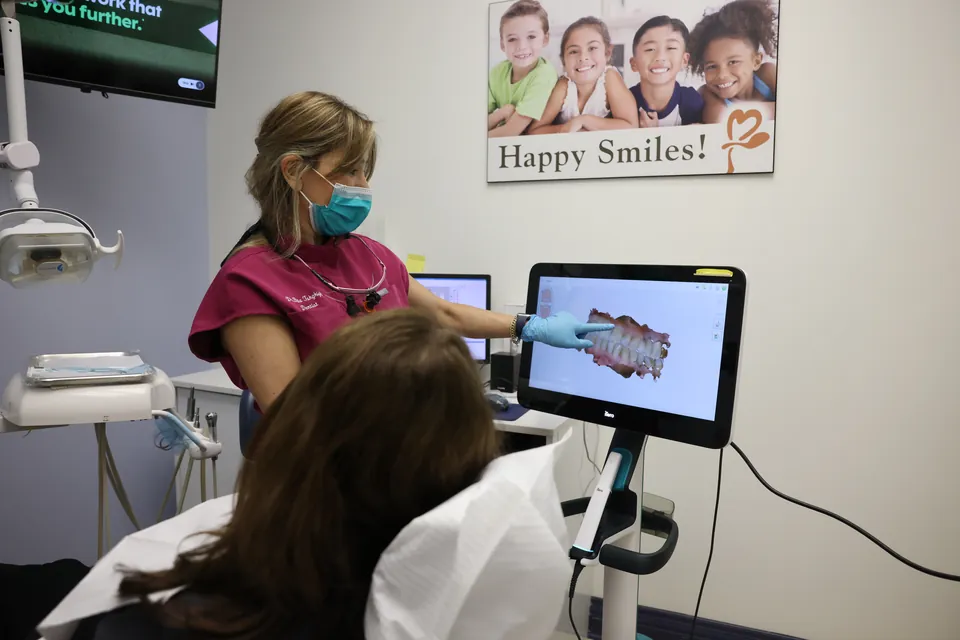
- Scan or impressionA digital scan or impression records the exact position of your teeth so the retainer can match them.
- Fit and instructionsYou try the retainer in, we check that it seats well, and you get a written wear schedule and cleaning tips.
- Follow-up checksShort visits over the next months confirm that your teeth are holding steady and the retainer still fits.
How it compares
| Question | Clear retainer | Wire-and-acrylic retainer | Bonded retainer |
|---|---|---|---|
| Removable | Yes | Yes | No |
| How visible | Hard to see | Wire shows across front teeth | Hidden behind teeth |
| Depends on you wearing it | Yes | Yes | No, always in place |
| Cleaning | Brush tray gently | Brush plate and wire | Floss threader under the wire |
| Can be adjusted | No, replaced if it no longer fits | Yes, wire can be adjusted | Repaired or rebonded |
General information. Your dentist will explain what applies to you.
Benefits and risks
Benefits
- Protects the time and effort you put into braces or aligners.
- Helps stop the slow crowding that happens to many teeth with age.
- Clear retainers are hard to notice and simple to wear at night.
- A bonded retainer works without you having to remember it.
Risks and limits
- Teeth can shift if a removable retainer is not worn as directed.
- Clear retainers can crack or warp, especially if exposed to heat.
- A bonded wire can come loose without you noticing, letting a tooth move.
- Plaque and tartar collect around bonded wires if flossing is skipped.
- Losing or damaging a retainer means making a new one.
Cost and coverage
If you have braces or aligners with us, your written treatment plan shows whether retainers are included and what a replacement would involve. For a new or replacement retainer on its own, the fee depends on the type and whether one or both arches need it. We use the Ontario Dental Association fee guide as our reference and bill all insurance plans directly, although some plans have rules about replacing retainers. The Canadian Dental Care Plan does not currently list orthodontic services; IFHP rules vary, so we check for you. Ask about our in-house dental plan and student program. You'll get a written estimate before anything is made.
What shapes your estimate
- The type of retainer and whether you need upper, lower or both
- Whether a new scan or impression is needed
- Replacing a lost or damaged retainer versus a first set
- Repairing or rebonding a loose bonded wire
- Your plan's orthodontic coverage and replacement rules
Read more about insurance and payment, the Canadian Dental Care Plan and IFHP coverage.
After your visit
- Take removable retainers out to eat, and store them in their case, not in a napkin.
- Rinse and brush your retainer each time it comes out, using cool water and mild soap.
- Keep it away from hot water, dishwashers, car dashboards and pets.
- Bring your retainer to every checkup so we can look at the fit.
Questions
How long do I need to wear a retainer?
Usually full-time for the first few months, then at night for the long term. Teeth can shift at any age, so stopping completely raises the chance they move. Dr. Sobouti will set the schedule for your teeth.
I lost my retainer. What should I do?
Call us soon rather than waiting until your next visit. Teeth can start to drift within weeks. If you have an older retainer that still fits, wear it until a new one is ready.
Is a permanent retainer really permanent?
It is fixed to your teeth, so it stays in place day and night. The wire can still loosen, break or collect tartar. We check it at each visit and repair or replace it if needed.
My retainer feels tight. Is that normal?
A little tightness after a few nights off can mean your teeth have started to move. Wear it as directed and it may settle within a day or two. If it will not seat or causes pain, stop forcing it and call us.
Can I make a retainer from my aligner trays?
Aligner trays are not designed to be used long term as retainers and wear out quickly. A retainer made after treatment is shaped to hold your final tooth positions. Ask us which type suits you.
How do I clean a clear retainer?
Brush it gently with a soft toothbrush and mild soap, then rinse in cool water. Avoid toothpaste, which can scratch the plastic, and never boil it. A weekly soak in a retainer cleaner can help.
Reviewed by the dentists at Aurora Gateway Dental Care. Last updated October 29, 2026. This page is general information, not personal medical advice.
Your dentist

Dr. Farhad Sobouti, DDS, MSc, FRCDC
DDS, Shahid Beheshti University of Medical Sciences
Read more →Trusted health information
Related treatments
Patients visit from
Newmarket · Richmond Hill · Oak Ridges, Richmond Hill · East Gwillimbury · Holland Landing · Mount Albert · King City · Nobleton · Stouffville · Bradford
More about orthodontics and braces
From our patient blog
Ask us about retainers
289-475-5497Prefer to type? Send a request and we'll contact you to confirm a time.
676 Wellington Street East, Unit 3
Aurora, ON L4G 0K3