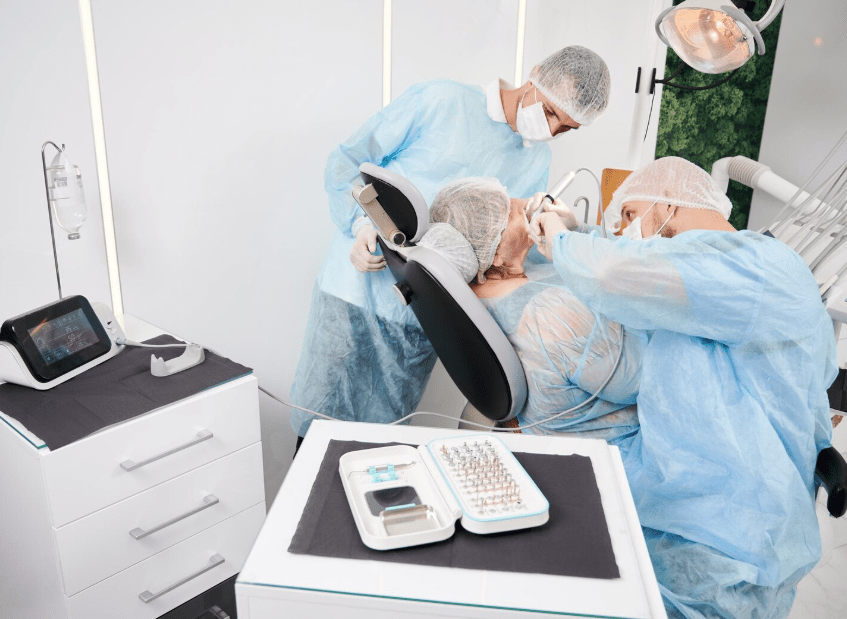
Dental implants are the gold standard for replacing missing teeth, offering a permanent, stable, and natural-looking solution that restores both function and appearance. If you are dealing with tooth loss, implants are one of the most effective long-term treatments available in modern dentistry. At Aurora Gateway Dental, patients across the region receive personalized implant care backed by clinical expertise and a genuine commitment to patient well-being.
Tooth loss affects millions of people and can result from decay, gum disease, injury, or aging. Regardless of the cause, leaving a gap in your smile can lead to bone loss, shifting teeth, and difficulty chewing or speaking. Understanding your treatment options is the most important first step toward a healthier, more confident smile.
What Are Dental Implants?
A dental implant is a titanium post surgically placed into the jawbone to serve as an artificial tooth root. Once the implant fuses with the bone through a process called osseointegration, a custom-made crown is attached on top, creating a replacement tooth that looks, feels, and functions like a natural one.
The three main components of a dental implant are:
- An implant post – a small titanium screw anchored into the jawbone
- Abutment – a connector piece that sits on top of the post
- Crown – the visible, custom-fabricated tooth that attaches to the abutment
Unlike bridges or dentures, implants address tooth loss at the root level. This makes them uniquely capable of preserving the jawbone and preventing the facial changes that often follow tooth extraction.
Who Is a Good Candidate for Dental Implants?
Most healthy adults with missing teeth are candidates for dental implants. A comprehensive assessment by a licensed dental professional registered with the Royal College of Dental Surgeons of Ontario (RCDSO) is essential before any treatment begins.
You may be a strong candidate if you:
- Have one or more missing teeth
- Have a fully developed jaw (typically age 18 and above)
- Have sufficient bone density to support an implant
- Have healthy gums free from active infection
- Are committed to proper oral hygiene and follow-up care
Additional evaluation may be needed if you:
- Have uncontrolled diabetes or autoimmune conditions
- Are undergoing chemotherapy or radiation therapy
- Have significant bone loss in the jaw
- Smoke heavily or use tobacco products regularly
As part of restorative dentistry, dental implant treatment is planned individually based on each patient’s bone structure, gum health, and overall medical history. No two treatment plans are identical, which is why a thorough consultation is always the starting point.
Types of Dental Implants
Single Tooth Implant
The most common type, a single-tooth implant, replaces one missing tooth without affecting surrounding healthy teeth. It is ideal for isolated tooth loss resulting from decay, injury, or planned extraction.
Implant-Supported Bridge
When two or more adjacent teeth are missing, an implant-supported bridge uses two implants as anchors to span the gap. This avoids the need to crown or alter healthy neighboring teeth, which a traditional dental bridge requires.
All-on-4 and Full Arch Implants
For patients missing most or all teeth in one arch, All-on-4 implants support a full set of fixed replacement teeth using just four strategically placed implants. This is a highly effective option for patients who have worn dentures and want a more stable, permanent solution.
Mini Implants
Smaller in diameter than standard implants, mini implants are used in areas with limited bone mass or to stabilize lower dentures. They are placed with a less invasive procedure and often have a shorter recovery period.
The Dental Implant Procedure: Step by Step
Understanding the implant process from start to finish can significantly reduce anxiety. The timeline typically spans several months, as proper healing at each stage is essential to long-term success.
- Initial Consultation and Imaging – Your dental team will take X-rays or 3D scans to assess bone density, gum health, and jaw anatomy. A personalized treatment plan is developed based on these findings.
- Bone Grafting (if required) – If the jawbone has deteriorated, a bone graft may be needed to create adequate support for the implant post. This step adds time to the process but is critical when bone volume is insufficient.
- Implant Placement – The titanium post is surgically inserted into the jawbone under local anesthesia. This is performed as part of oral surgery and is typically completed in a single surgical session.
- Osseointegration – Over the following three to six months, the implant gradually fuses with the surrounding bone. This is the most important phase of the entire process and cannot be rushed.
- Abutment Placement – Once osseointegration is confirmed, a small connector piece is attached to the implant post to hold the final restoration in place.
- Crown Placement – A custom-made crown, precisely matched to the color and shape of your surrounding teeth, is secured onto the abutment. The final result is a tooth that blends naturally into your smile.
Dental Implants vs. Other Tooth Replacement Options
Patients considering tooth replacement often weigh implants against dentures and dental bridges. Here is a practical comparison:
| Option | Natural Appearance | Bone Preservation | Longevity | Invasiveness |
|---|---|---|---|---|
| Dental Implants | Excellent | Yes | Decades (with care) | Surgical |
| Dentures | Good | No | 5-10 years (relining needed) | Non-surgical |
| Dental Bridge | Good | No | 10-15 years | Minimal (crowns on adjacent teeth) |
Dental implants are the only tooth replacement option that actively preserves the jawbone. Without stimulation from a tooth root or implant, the bone beneath a gap begins to resorb, leading to changes in facial structure over time. Dentures and bridges do not prevent this process.
If gum disease is present, it must be treated before implants can be placed. The periodontics team can address active gum conditions to create a healthy foundation for implant surgery.
Common Myths About Dental Implants
Myth 1: Dental implants are extremely painful. Implant placement is performed under local anesthesia, and most patients report that discomfort during and after the procedure is manageable and less intense than anticipated. Post-surgical soreness typically subsides within a few days.
Myth 2: Implants are only for older adults. Dental implants are appropriate for any adult with a fully developed jaw, regardless of age. Many younger adults benefit from implants following sports injuries, accidents, or congenital tooth absence.
Myth 3: Implants look artificial. Modern implant crowns are fabricated using precise shade-matching technology. Once placed, they are virtually indistinguishable from natural teeth, both in appearance and in the way they feel when you chew or speak.
Myth 4: Implants require special maintenance. Implants are cared for just like natural teeth: brush twice daily, floss regularly, and attend routine checkups. Maintaining strong oral hygiene habits is the single most important factor in implant longevity.
Myth 5: The process is too long to be worth it. While osseointegration does take several months, the implant itself is designed to last a lifetime with proper care. Most patients find the timeline more than justified by the permanent, high-functioning result.
Aftercare and Maintenance
Proper aftercare in the days following surgery significantly improves healing and reduces the risk of complications.
In the first 48 to 72 hours:
- Eat soft foods and avoid chewing near the surgical site
- Apply ice packs to reduce swelling (20 minutes on, 20 minutes off)
- Avoid smoking, alcohol, and strenuous physical activity
- Take any prescribed medications as directed
- Rinse gently with warm salt water after the first 24 hours
Long-term maintenance:
- Brush the implant crown twice daily with a soft-bristled toothbrush
- Floss daily, including carefully around the base of the implant crown
- Use an antibacterial mouthwash if recommended by your dentist
- Attend dental checkups every six months for professional cleaning and monitoring
Patients who grind or clench their teeth should discuss this with their dental team. A custom night guard can protect both implants and natural teeth from the excessive pressure associated with bruxism.
How Long Do Dental Implants Last?
With consistent care and good oral hygiene habits, dental implants can last 20 to 30 years or longer. The titanium post is designed to be a permanent fixture in the jaw. The porcelain or ceramic crown attached to it may experience normal wear over time and could require replacement after 10 to 15 years, depending on use and care.
Key factors that influence implant longevity include:
- Daily oral hygiene practices
- Smoking status (smoking significantly increases failure risk)
- Underlying health conditions such as diabetes
- Bite forces and habits such as grinding
- Quality of the initial placement and bone integration
- Consistency of professional follow-up care
Dental Implants and Your Broader Oral Health
Dental implants work best as part of a complete approach to oral health. Before proceeding with implant placement, other dental concerns should be addressed first. For example, if impacted or problematic wisdom teeth are present, wisdom teeth removal may be recommended to prevent complications during or after implant surgery.
Patients interested in straightening their teeth alongside replacing missing ones can explore Invisalign in Aurora as part of a comprehensive smile restoration plan. Alignment and spacing can influence where implants are placed and how the final result looks.
For families, having one consistent dental home for all ages makes coordinating care much simpler. As a trusted Family Dentist in Aurora, Aurora Gateway Dental offers pediatric dentistry for children and complete restorative services for adults, all under one roof.
For patients who have questions about coverage or need to understand their options, the clinic accepts CDCP (Canadian Dental Care Plan) patients and also offers Kids CDCP dental services for eligible younger patients.
Why Choose Aurora Gateway Dental?
Aurora Gateway Dental, located at 676 Wellington Street East, Unit 3, Aurora, ON L4G 0K3, is a recognized Dental Clinic in Aurora serving patients of all ages with a full spectrum of dental services. The clinic provides cosmetic dentistry, preventive care, restorative dentistry, periodontics, orthodontics, Invisalign, general dentistry, family dentistry, pediatric care, oral hygiene, oral surgery, emergency dental care, night guards, wisdom teeth removal, and dental implants.
The team proudly offers multilingual support in Tamil, Farsi, and Tagalog, ensuring accessible care for Aurora’s diverse communities. The clinic is welcoming to new patients and also accepts IFHP (Interim Federal Health Program) patients, making it a dental home for refugees as well through its refugee dental services.
An in-house dental insurance plan and a student discount program are available to help make care accessible for patients without employer-sponsored coverage. Extended hours include Tuesday and Thursday from 10:00 AM to 7:00 PM, and Saturday from 9:00 AM to 3:00 PM, accommodating patients with busy weekday schedules.
As a Top Dentist in Aurora practice and consistently recognized Best Dental Clinic in Aurora, Aurora Gateway Dental combines clinical expertise with a warm, patient-centered environment. All dental professionals are registered with the Royal College of Dental Surgeons of Ontario (RCDSO).
To schedule your consultation, call +1 647-360-6047, email info@auroragatewaydental.com, or book your appointment online.
Frequently Asked Questions
1. Are dental implants covered by insurance in Canada? Coverage varies by provider and plan. Some private dental insurance plans cover a portion of the implant procedure cost. CDCP coverage may also apply for eligible patients. It is best to confirm your specific benefits directly with your insurer and the dental office before beginning treatment.
2. How do I know if I have enough bone for an implant? A dental professional will take X-rays or 3D cone beam scans to evaluate your bone density and volume. If bone loss has occurred, a bone grafting procedure can often restore sufficient support for a successful implant.
3. Can dental implants fail? Implant failure is uncommon but possible. Risk factors include smoking, uncontrolled systemic health conditions, and infection around the implant site (a condition called peri-implantitis). Choosing an experienced, licensed provider and following all aftercare instructions substantially reduces this risk.
4. Is there an age limit for dental implants? There is no upper age limit for implants. Patients of advanced age receive implants successfully every day. The lower limit is determined by jaw development, typically around age 18, to ensure the bone has reached its full maturity.
5. How long is the recovery after implant surgery? Most patients resume normal daily activity within one to two days. Soft tissue healing takes approximately one to two weeks. Full osseointegration of the implant with the jawbone takes three to six months, after which the permanent crown is placed.
Conclusion
Dental implants offer a permanent, natural-looking solution for patients dealing with one or more missing teeth. From a single tooth restoration to a full arch replacement, modern implant dentistry makes it possible to rebuild your smile with lasting confidence. A professional consultation with a licensed dental provider is the essential first step to understanding whether implants are the right fit for your oral health needs and long-term goals.